
Self-guided tour
Le musée vous propose de découvrir ses collections en autonomie (sans médiateur) avec des parcours de visite adaptés à chaque niveau scolaire et aux programmes de l’Éducation Nationale.
Pour chaque thématique, des dossiers d’accompagnement sont à votre disposition. Vous pouvez en adapter le contenu en fonction du niveau de vos élèves.
Bon à savoir ! Venez organiser en amont votre visite gratuitement en présentant votre contrat de réservation.
Afin de préparer les adultes accompagnateurs à la visite,téléchargez le guide « Accompagner une classe au musée ». Nouvelle fenêtre
Suggested routes
Exposition temporaire : Anne et Patrick Poirier. Odyssée de l’oubli
May 22 to August 30, 2026
Duration: 1 hour
Anne et Patrick Poirier investissent les espaces du Patio et de la Chapelle de l’Oratoire. Leurs œuvres, nourries par l’architecture, l’archéologie, la psychanalyse ou encore les grands mythes et utopies, se déploient sous forme d’installation monumentales, de dessins et de peintures. Elles questionnent la fragilité des civilisations, de la nature et de la mémoire, individuelle ou collective, face aux catastrophes ou au temps qui s’écoule.
À noter : de la musique à forte intensité est diffusée dans les deux espaces de l’exposition, en continu dans la Chapelle et par intermittence dans le Patio. Elle est susceptible de troubler l’attention.


Exposition temporaire : Plants and People
January 30, 2026 to January 3, 2027 – Room 21
Duration: 1 hour
Born out of a collaboration between the Nantes Museum of Art and the Pays de la Loire Regional Contemporary Art Fund, Plants and Peopleaddresses the question of the place of living things in our relationship with the world. With a selection of historical and contemporary works from both institutions, the exhibition explores the notions of conservation and preservation through the metaphor of plants.
Explore the museum!
Duration: 1h
What is a museum? A collection? Discover the Musée d'arts de Nantes with your students.
An accompanying booklet with activities based on a selection of works and architectural elements has been specially designed for this visit. You can download it from the link below, print it out and distribute it to your students.
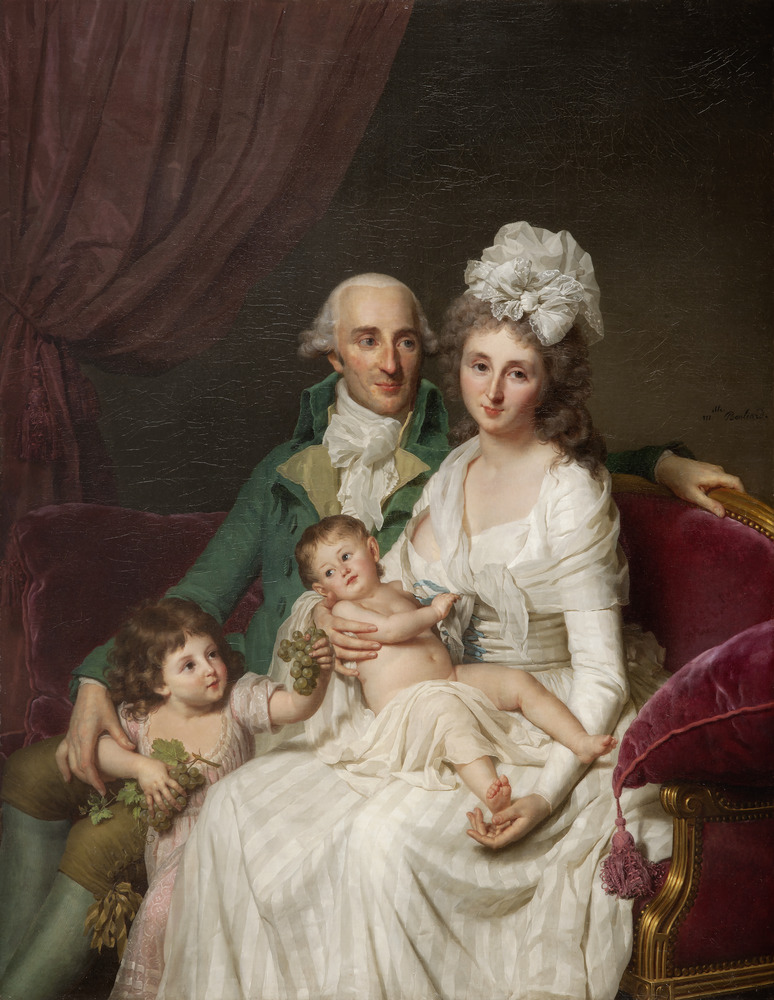
The portrait
Duration: 1h
What is a portrait?
Through the observation of works from various periods, come and discover the different types of portraits in the museum.
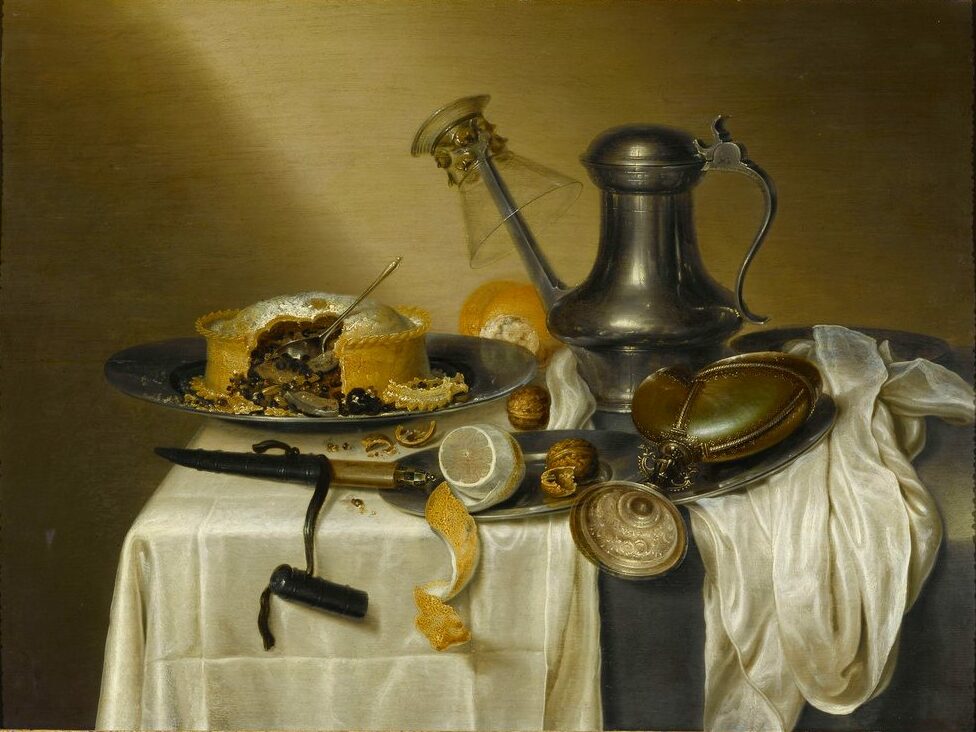
Still life and garnished tables
Duration: 1h
What is a still life in painting?
By observing a selection of works from the 17th century to the present day, you will discover the evolution of this genre and the different ways in which artists have seized upon it.

The landscape, the seasons
Duration: 1h
What is a landscape in painting?
Discover the evolution of this theme by observing works from different periods. The study of composition, color and workmanship will reveal to students the variety of ways in which this subject is represented.
Mythology
Cycle 3 only
Duration: 1h
Who are Diana, Aeneas or Hyacinth? This tour explores the great mythological figures through paintings and sculptures created between the 17th and 19th centuries.

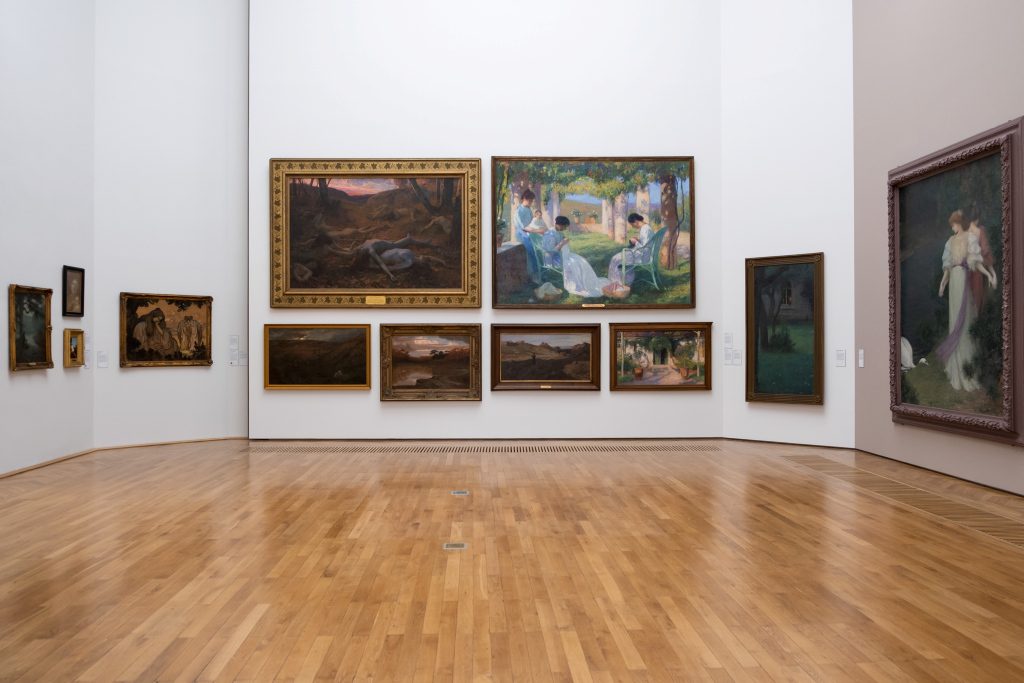
Free tour of the permanent collections
Durée : 1h à 1h30
À partir de 11h15
Would you like to take your own free tour of the Musée d'arts de Nantes? This is possible every day from 11.15 am, subject to availability.
To make your visit as comfortable as possible, we simply ask you to indicate on the New Window pre-booking form the works you wish to stop in front of.
Guided tours
The museum will help you discover its collections with themed tours adapted to each school level, lasting from 1h to 1h30!
Les visites guidées proposées aux classes de cycle 2 et cycle 3 participent au parcours d’éducation artistique et culturelle de chaque enfant par la découverte d’une institution culturelle et la rencontre avec des œuvres d’art d’époques variées.
Les visites en compagnie des médiateurs et médiatrices du musée favorisent une approche sensible et l’expression de chacun.
Guided tours of the permanent collections
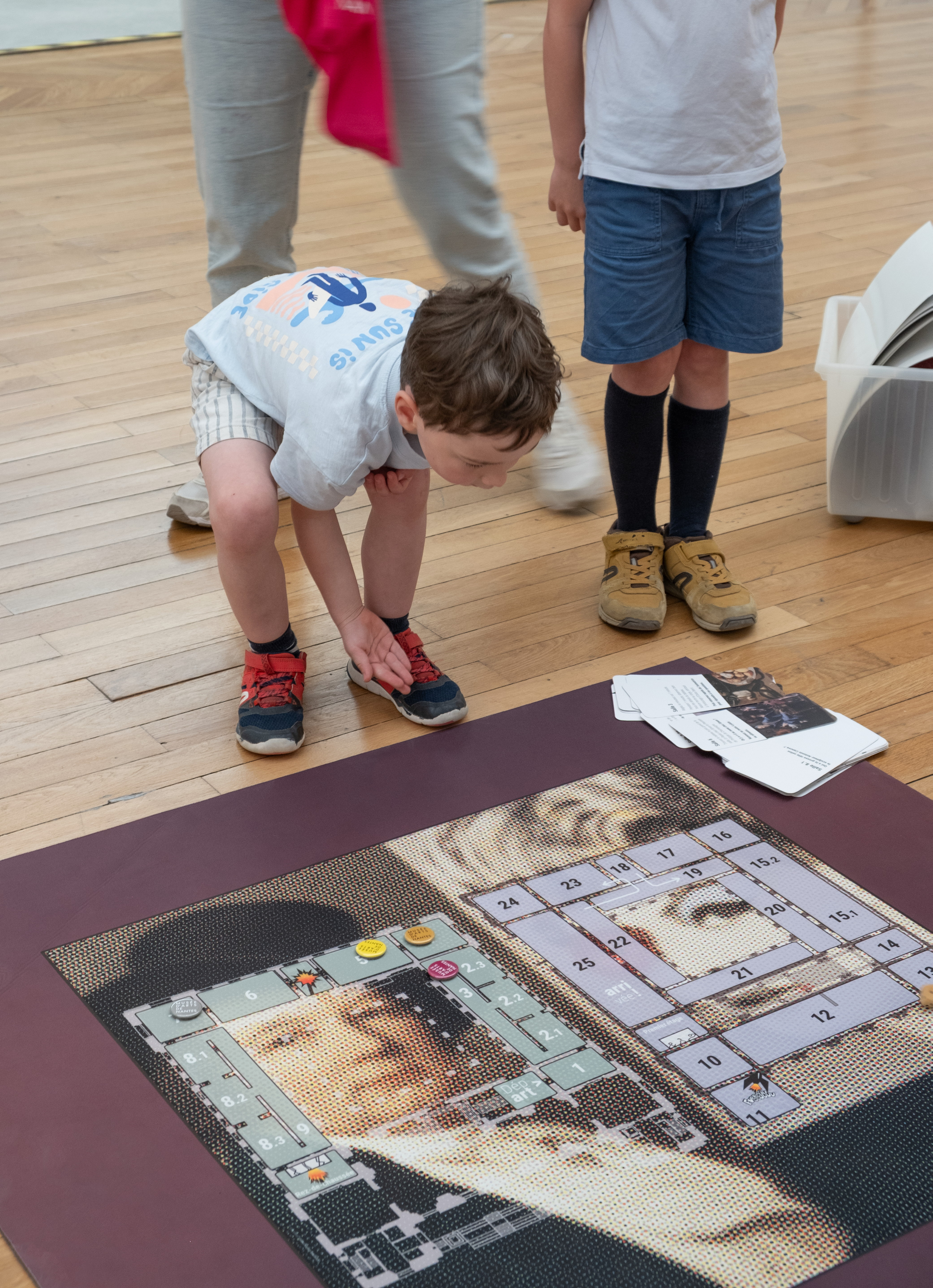
Back to the museum!
Durée : 1h
À partir de 11h15
Retour à la case musée est un jeu de l’oie qui se déroule dans les salles du musée pour une découverte ludique du lieu et de ses collections. Idéal pour un premier contact avec le musée.
Divisez la classe en 3 ou 4 petits groupes selon l’effectif total (7 élèves maximum par groupe). Il faut prévoir autant d’accompagnateurs que de groupes.
Design tour
Duration: 1h
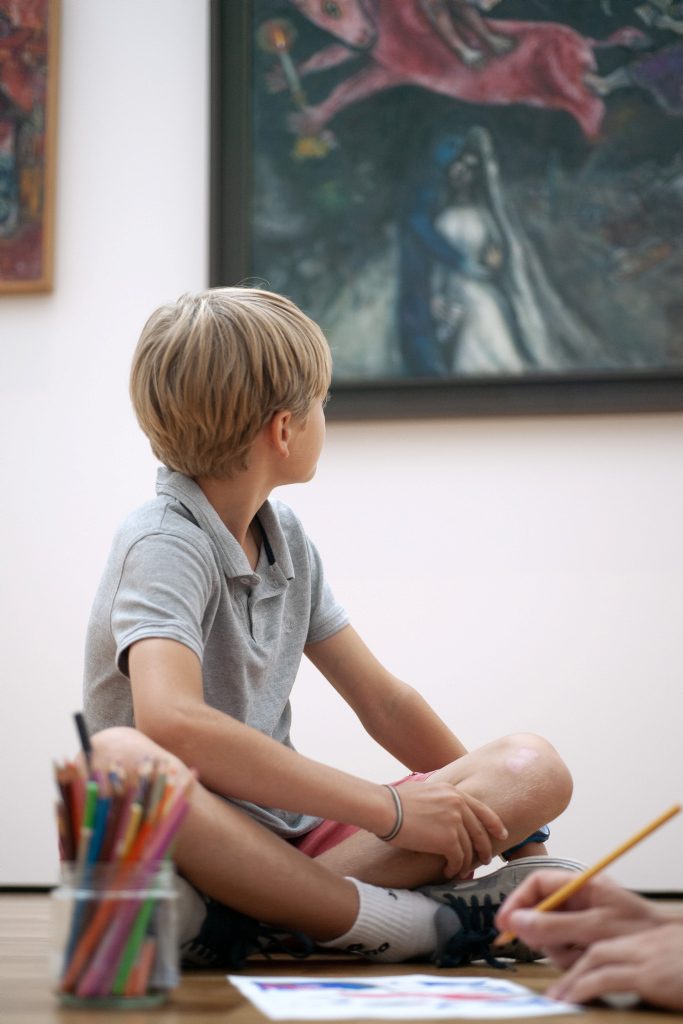
Discover the collections, pencils in hand. After observing the works, students draw and sketch shapes and lines, giving shape to their imaginations.
L’art en mouvement
Duration: 1h
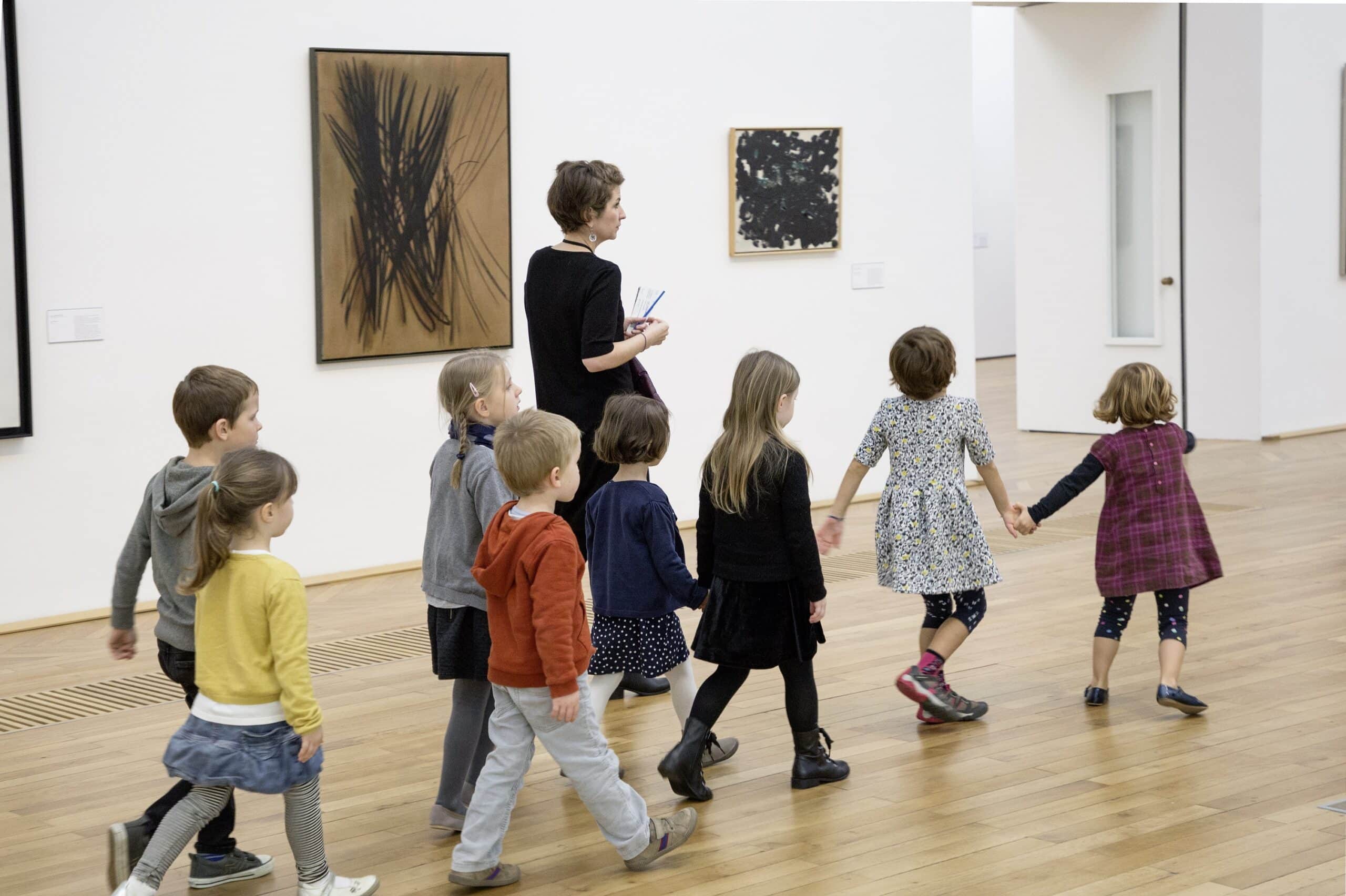
Are works of art condemned to immobility? This tour proves otherwise! From the movement depicted to the artist's gesture, via the viewer's place in front of the work, this tour leads students to experience their own bodies in front of the works: a balance on tiptoe or a dance step!
Abstraction/Figuration
Cycle 2
Durée : 1h
La peinture a-t-elle pour seul objectif d’imiter la réalité ? Qu’est-ce que l’abstraction ? La figuration ? Cette visite permettra aux élèves de différencier ces deux notions et de se questionner sur la finalité de la peinture.
Il est préférable de ne pas aborder les notions de figuration et d’abstraction avant la visite au musée. Les définitions de ces deux termes sont plus faciles à expliquer en découvrant les œuvres.

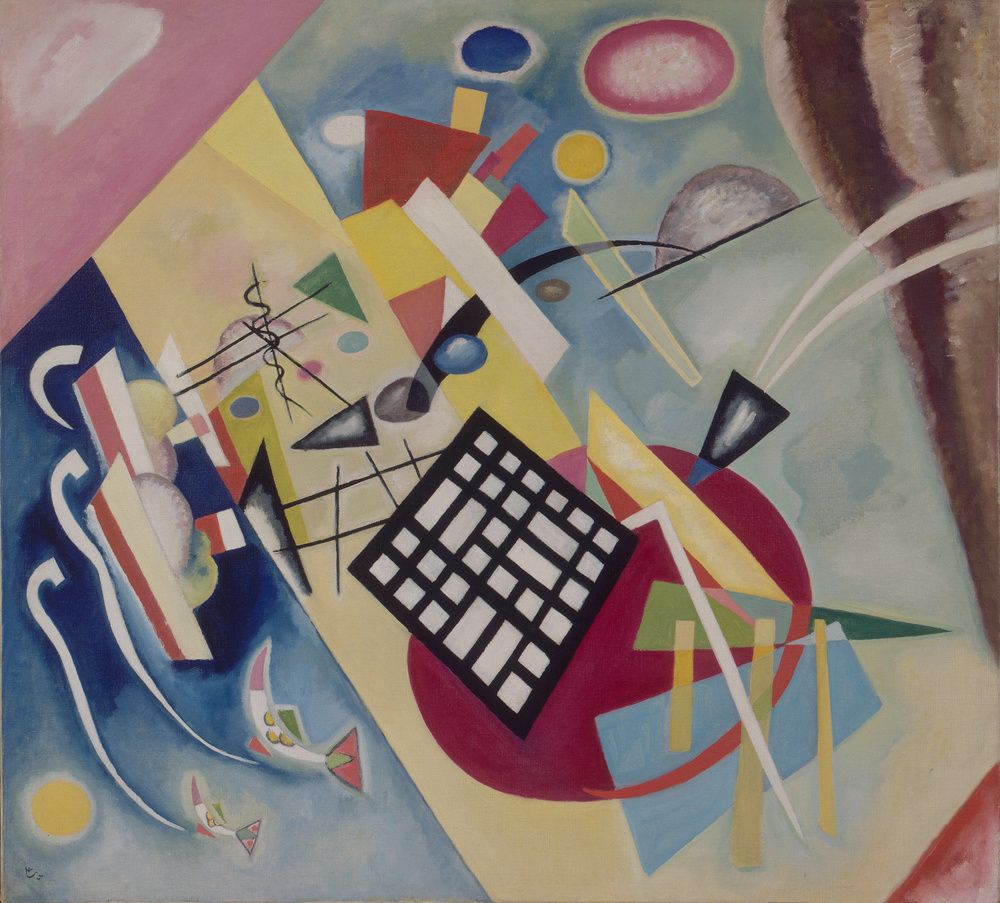
What is abstraction?
Cycle 3
Durée : 1h
Rythme, répétition, contrôle ou spontanéité… De l’abstraction géométrique à l’art gestuel, cette visite propose de découvrir l’abstraction et ses différentes formes.
Read a painting
Cycle 3
Durée : 1h30
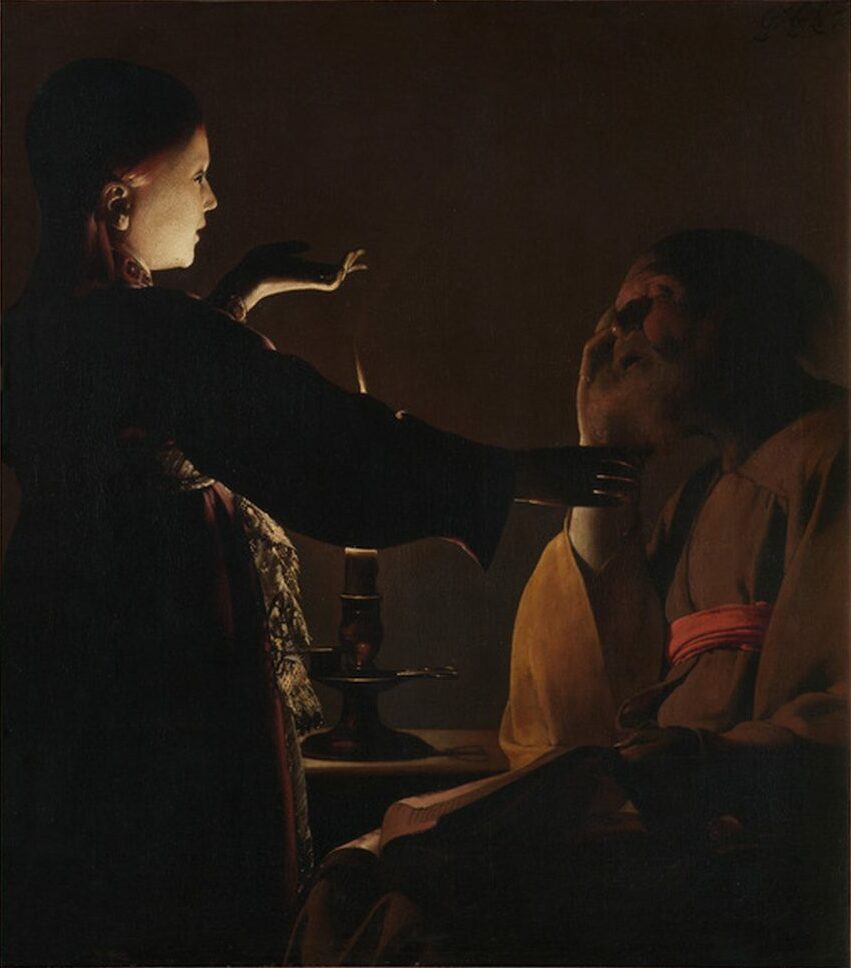
Lire une peinture c’est facile !
Il suffit de définir sa première impression devant un tableau, puis d’observer tour à tour son format, ses dimensions, sa composition, ses couleurs, sa lumière et sa facture et le tour est joué !
Venez essayer devant les œuvres du musée.

Discover the museum in Breton!
Duration: 1 hour
Dates pour l’année scolaire 2026-2027 à venir
Discover the Musée d'arts de Nantes with a Breton-speaking guide.
Ergerzhout ar rmirdi
Petra eo ur Mirdi arzoù ? Peseurt oberennoù a c'heller gwelout ennañ? Kit da zizoleiñ Mirdi an arzoù, e istor e disavouriezh ha liesseurted e zastumadegoù. Eus an henarz d'an arz a-vremañ, eus pales an arzoù 1900 d'ar C'hub an XXIvet kantved e roio deoc'h an hentad-se ur sell kentañ Mirdi arzoù Naoned.
Workshop
Painting from A to Z
Durée : 1h30
Départs des ateliers à 10h ou 14h
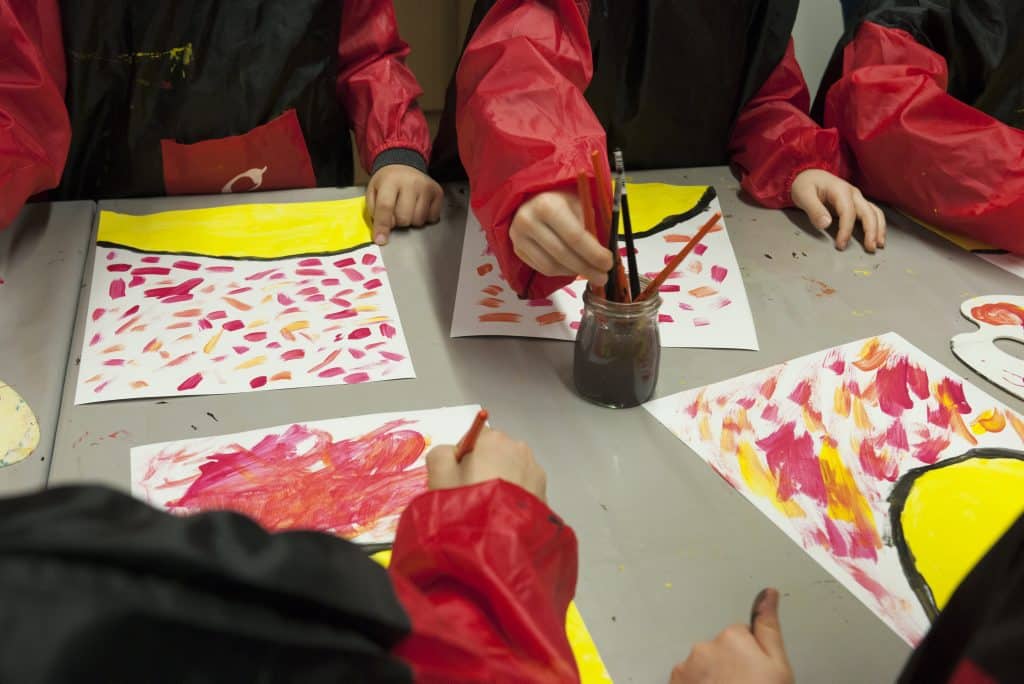
En découvrant les différents outils et matériaux de la peinture, il s’agira de fabriquer de la peinture à partir de pigments et d’expérimenter des gestes courants, l’aplat, le dégradé et la touche.
La sculpture de A à Z
Cycle 3
Durée : 1h30
Départs des ateliers à 10h ou 14h
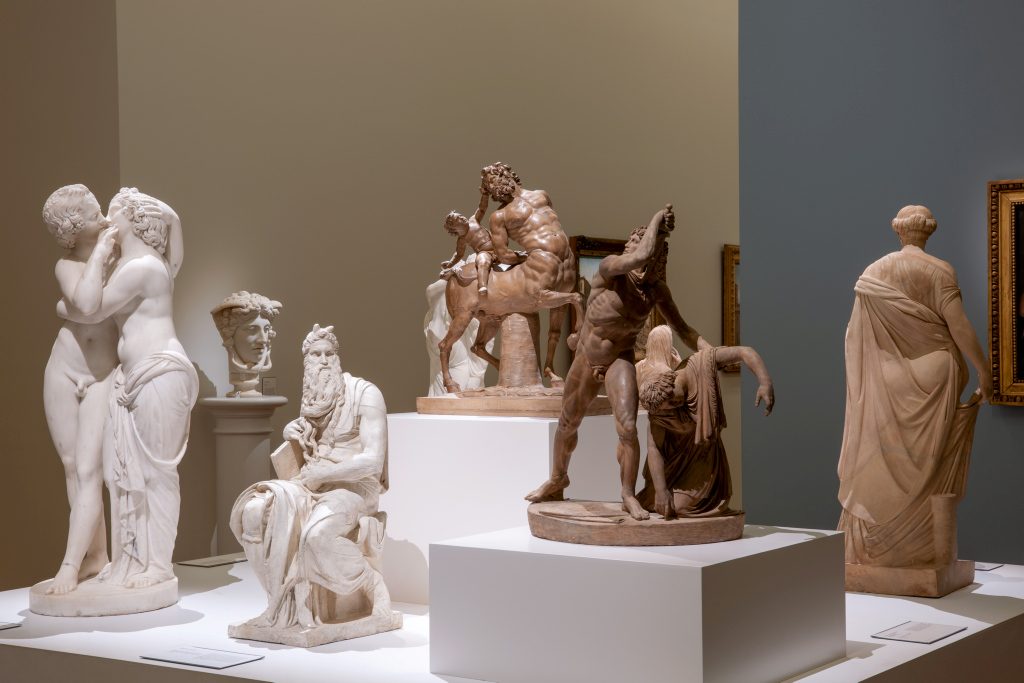
Quels sont les différents matériaux utilisés en sculpture ? Les techniques associées ? Sculptures en terre cuite, en plâtre, en marbre, en bronze… après avoir découvert cette diversité d’œuvres dans les salles du musée, les enfants expérimentent la technique du modelage en atelier.