
-
The exhibition
Plants at the Musée d'arts de Nantes
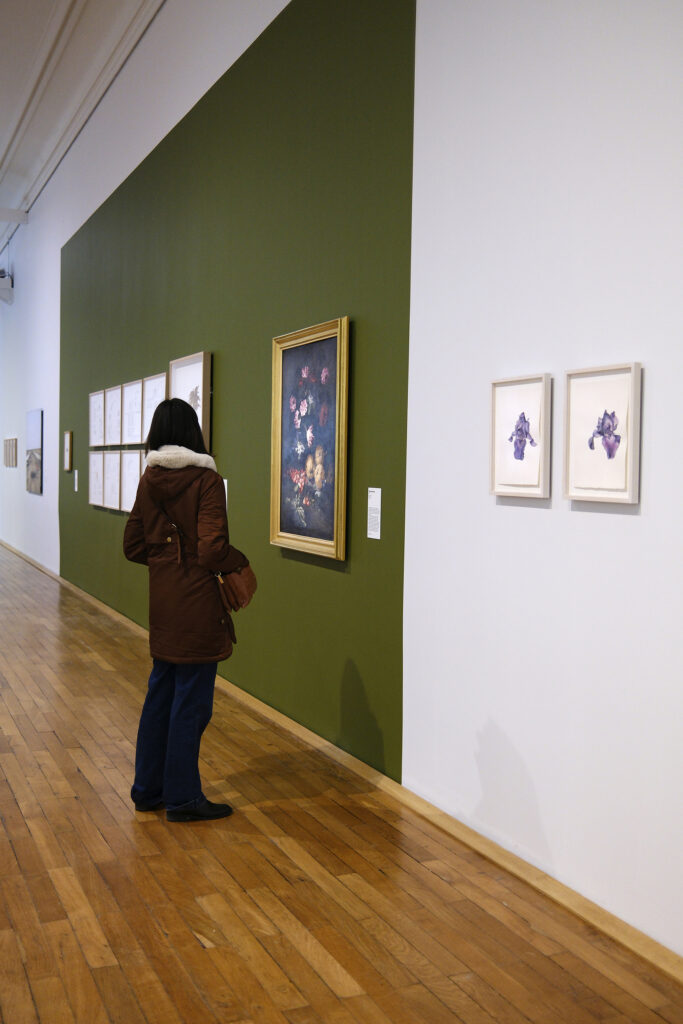
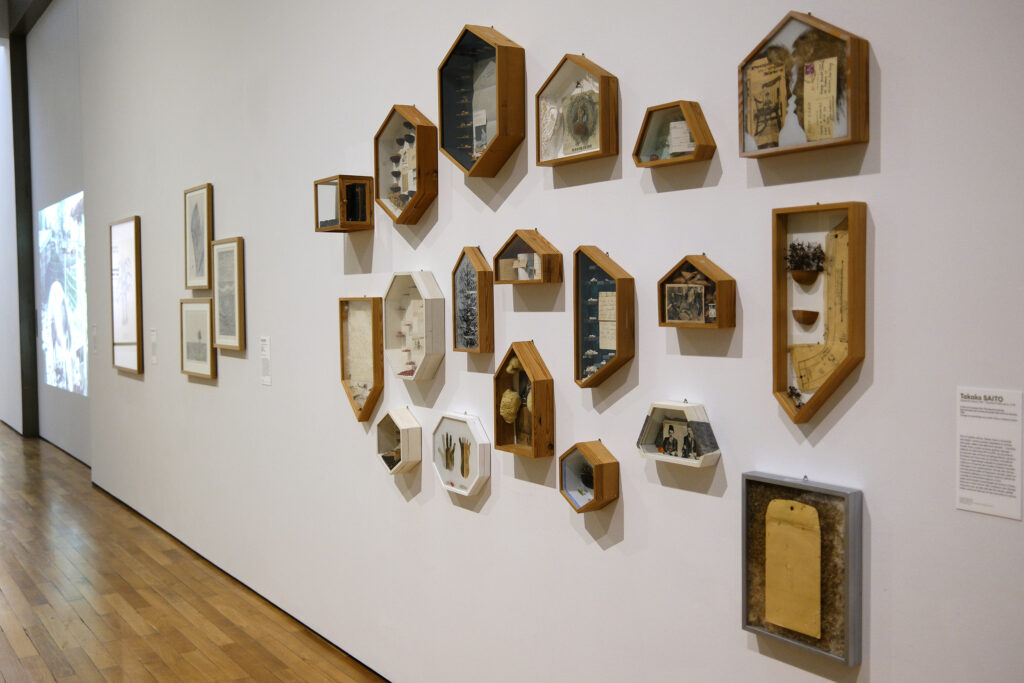
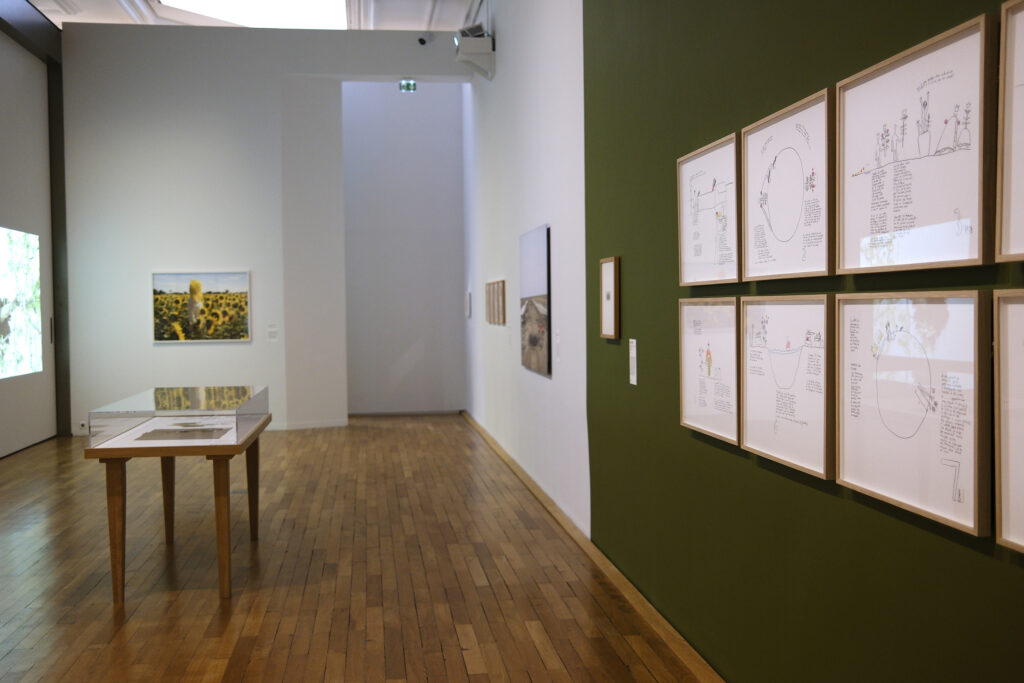
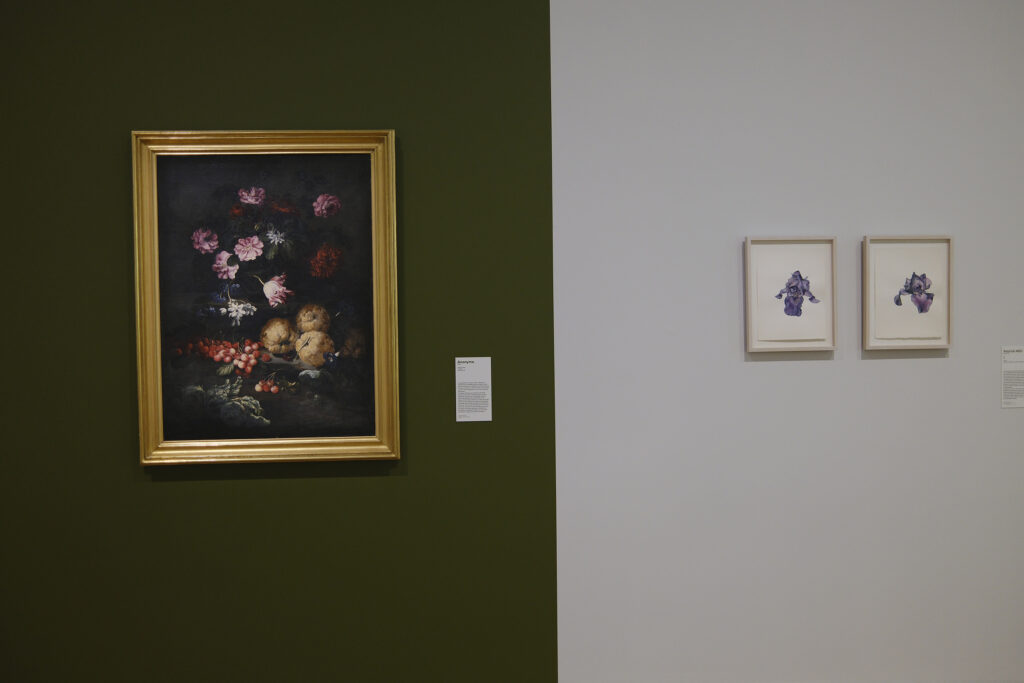
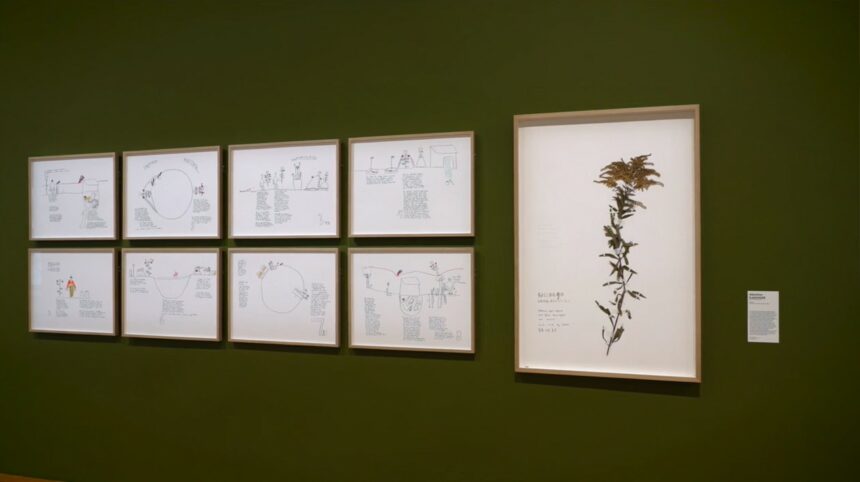
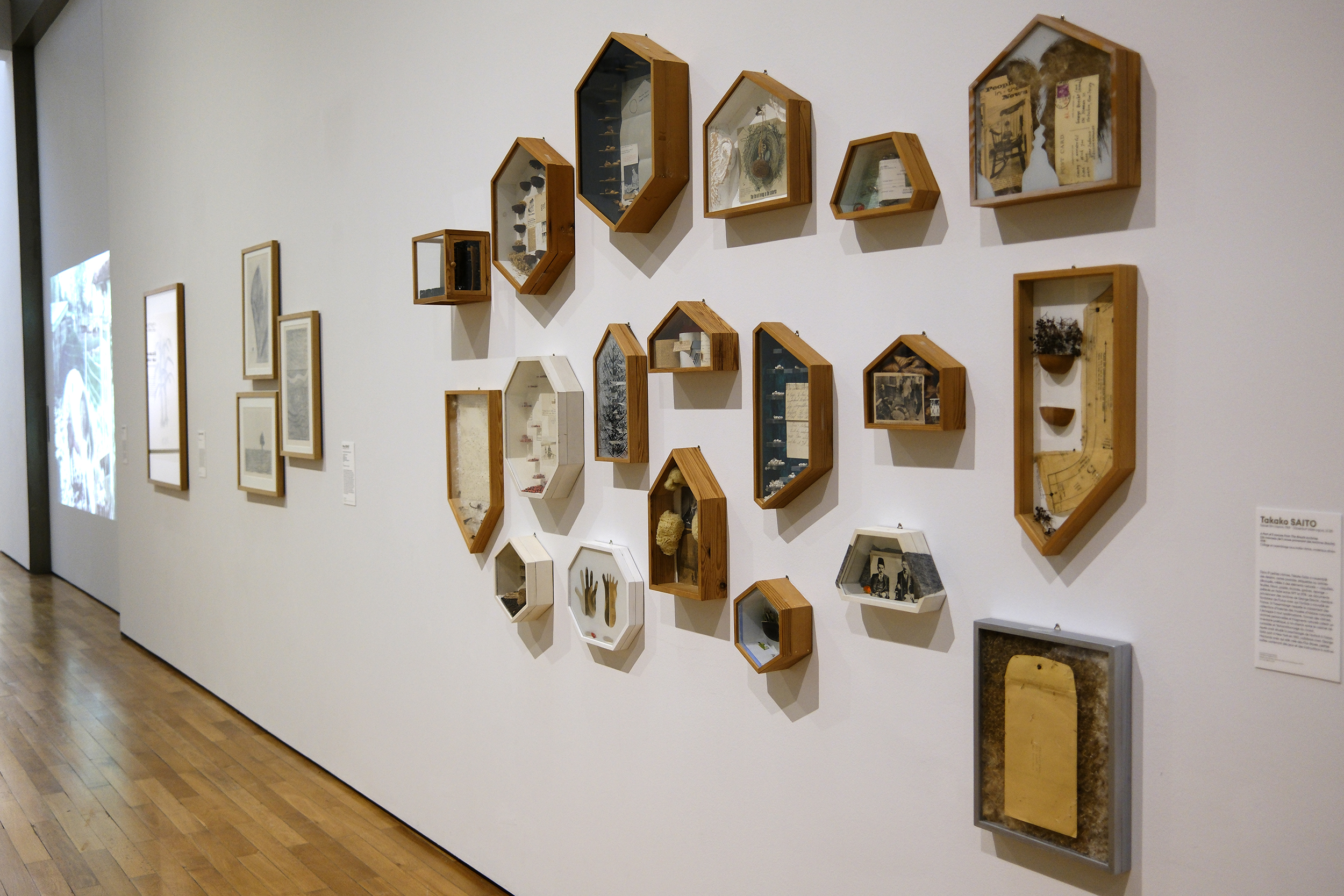
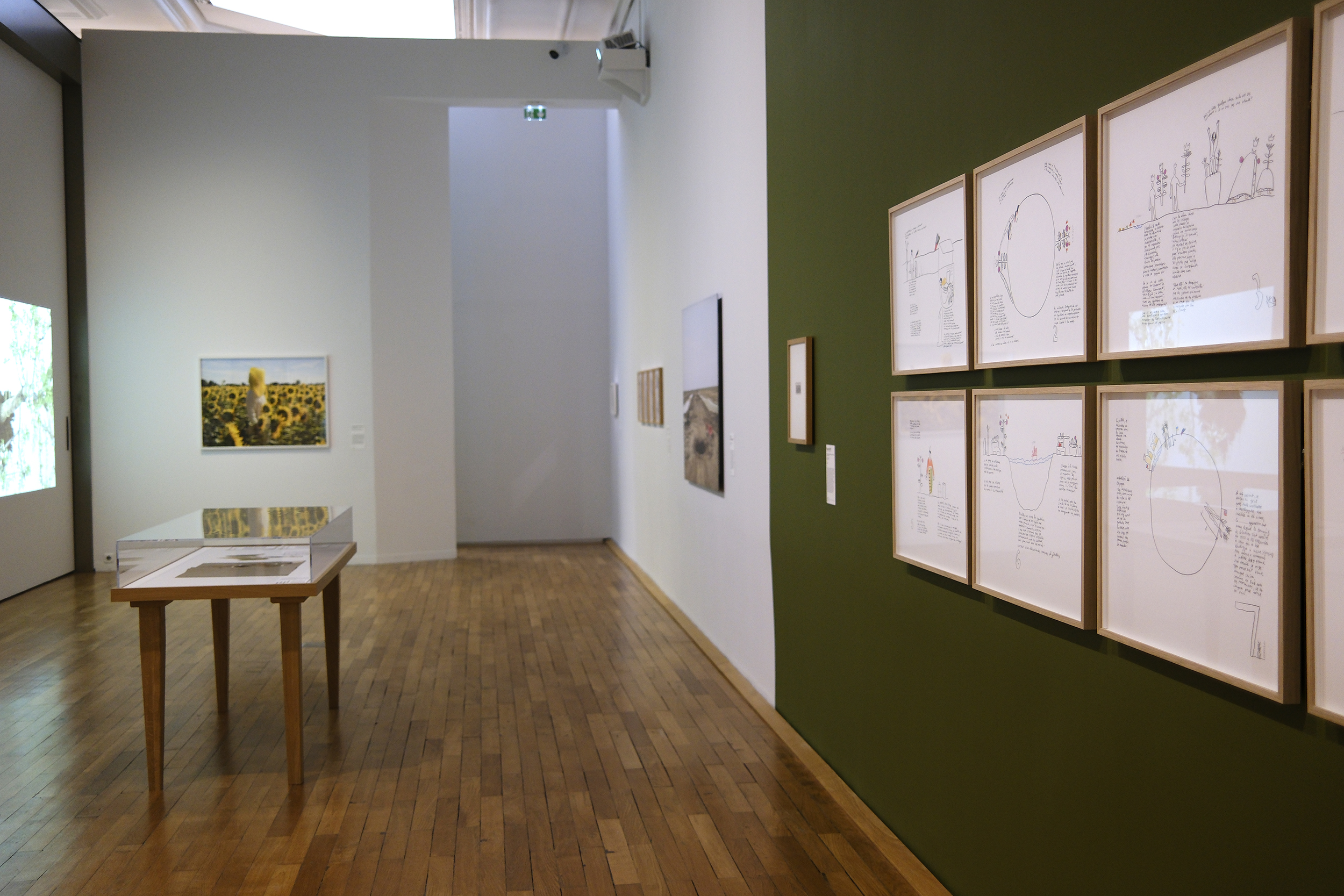
The exhibition at the Musée d'arts de Nantes explores notions of conservation and preservation through the metaphor of the plant. Ukrainian artist Alevtina Kakhidze's central work, Invasions, links the proliferation of invasive plants to the logic of human conquest, subtly evoking the invisible wounds of war. A poetic and peaceful plea, Plants and People brings together works that question the tensions between fragility and resistance, disappearance and memory.
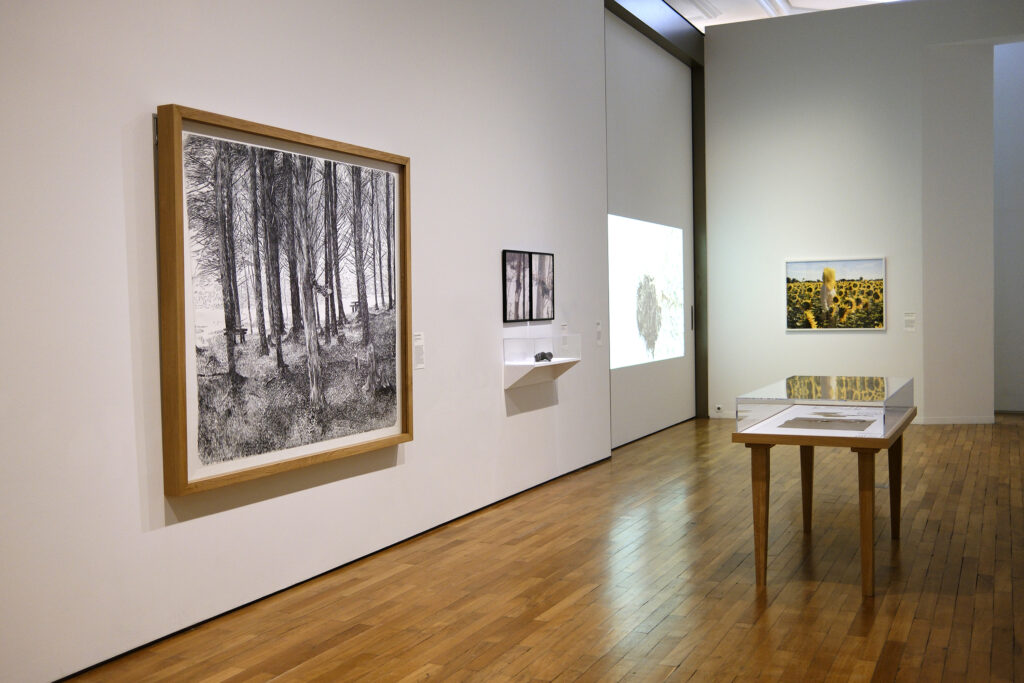
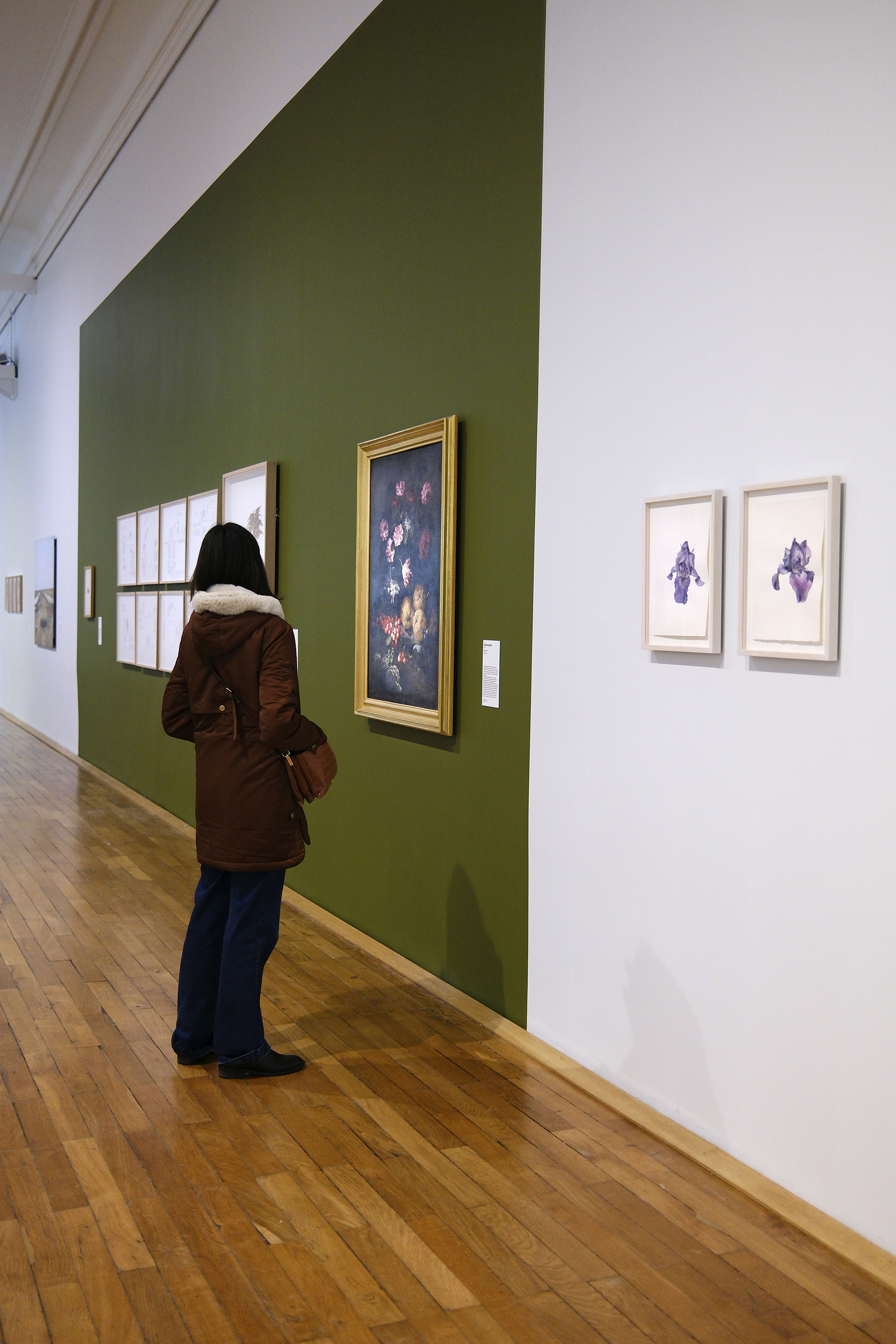
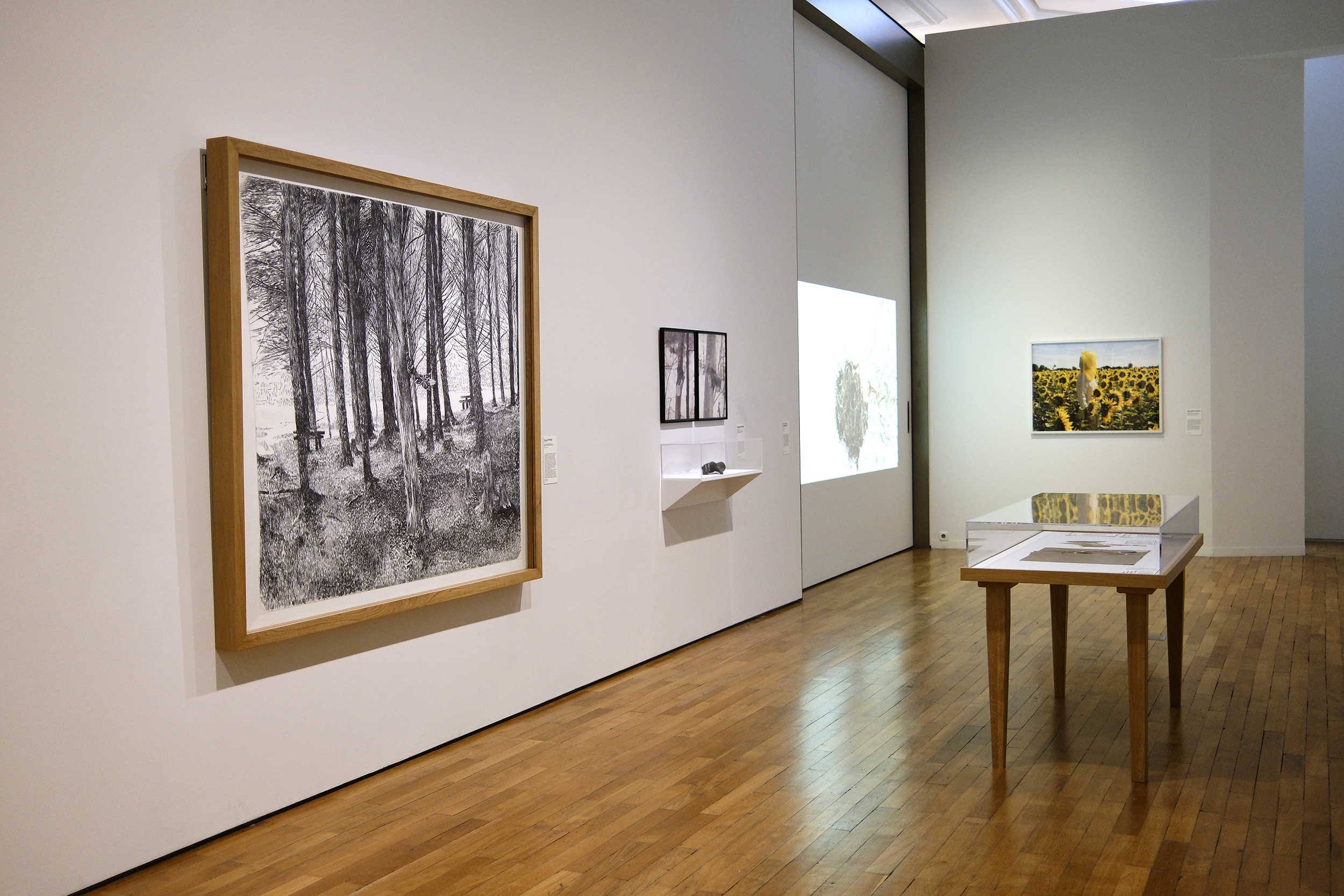
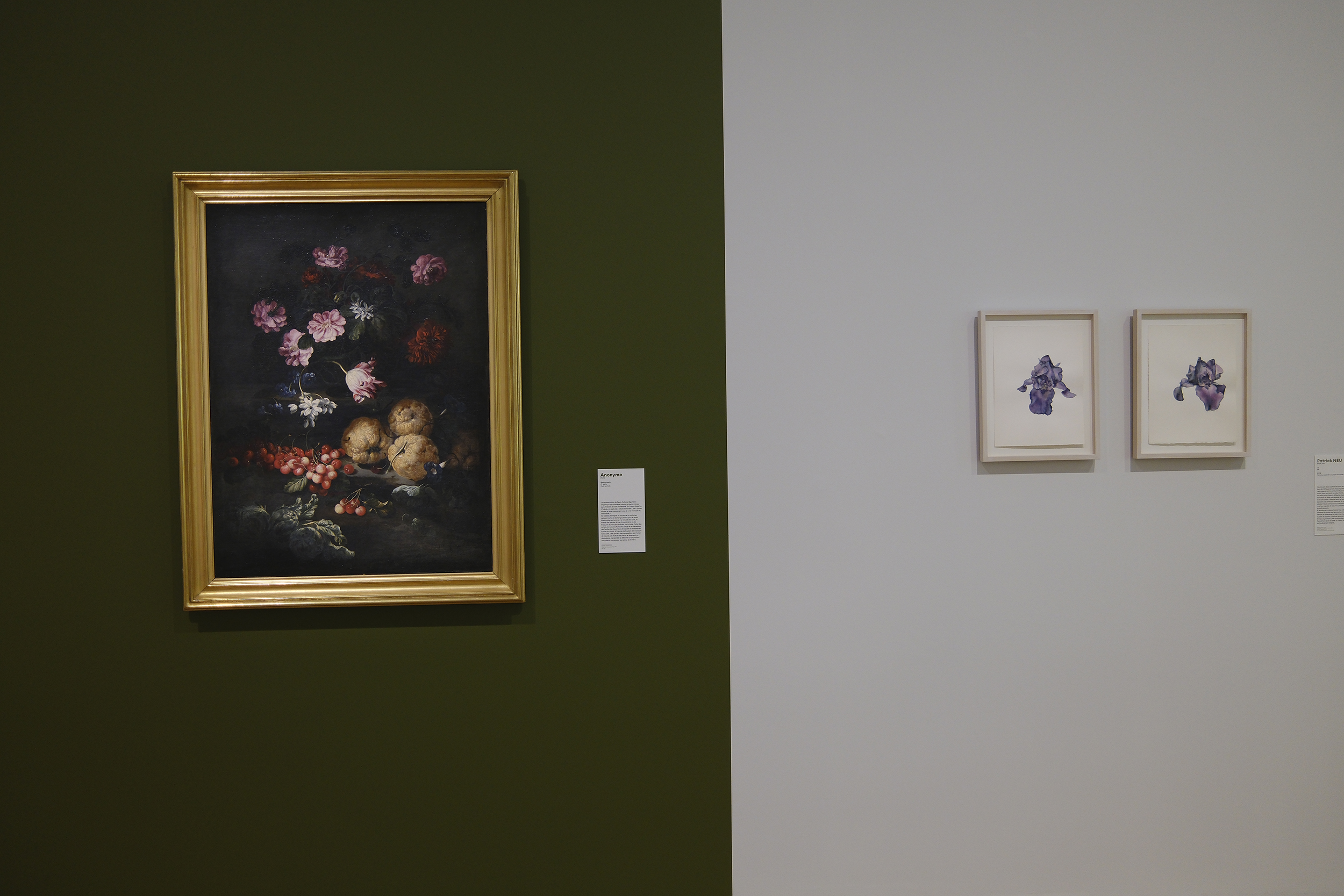
The tour opens with herbariums from the Jardin des Plantes in Nantes (18ᵉ-21ᵉ century), both scientific and sensitive witnesses to the desire to retain what fades away. This reflection on impermanence continues in the works of Patrick Neu, with Iris, or Guillaume Janot with Urban species. Wild puppy, while Elena Brotherus juxtaposes beauty and asphyxiation in a poignant photograph in which her face is hidden under a plastic bag in the middle of a field of sunflowers(Portrait Series - Gelbe Musik with Sunflowers).
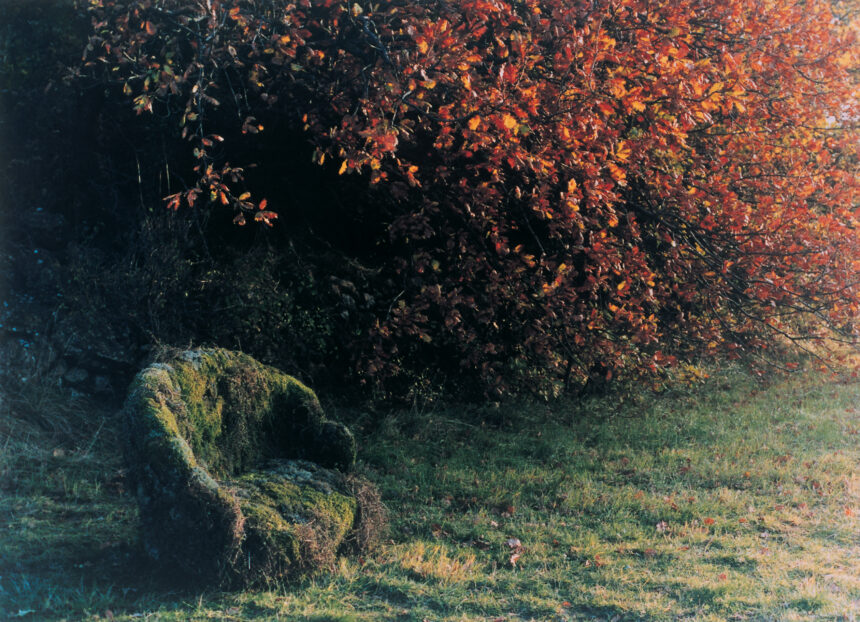
Marie Denis (1972), Le Divan, 1996. Photo: Stéphane Bellanger © Adagp, Paris, 2025
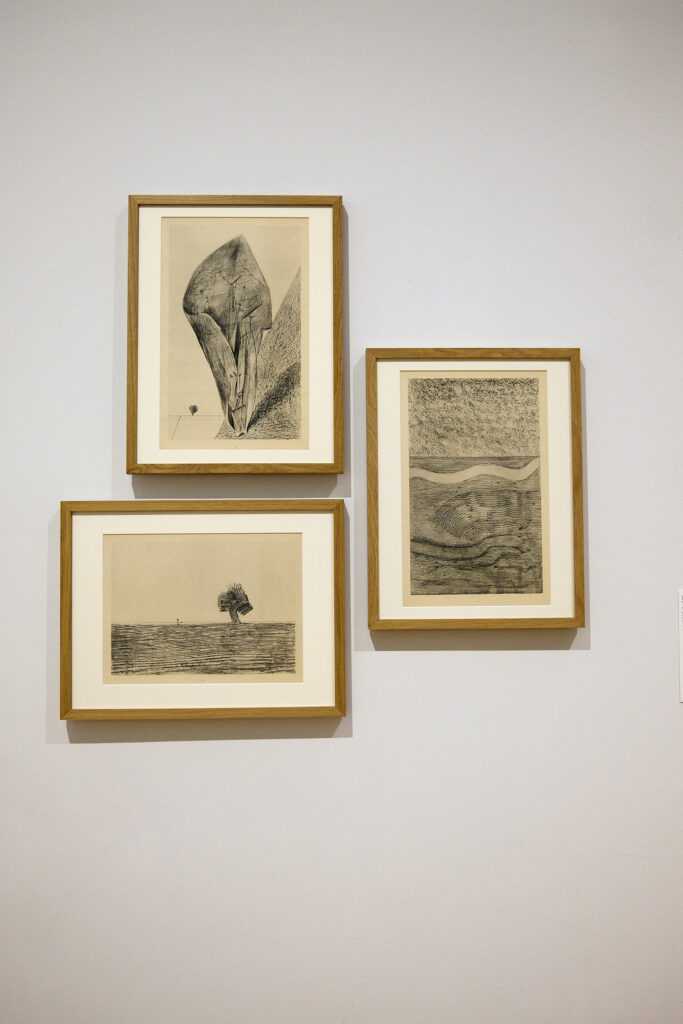
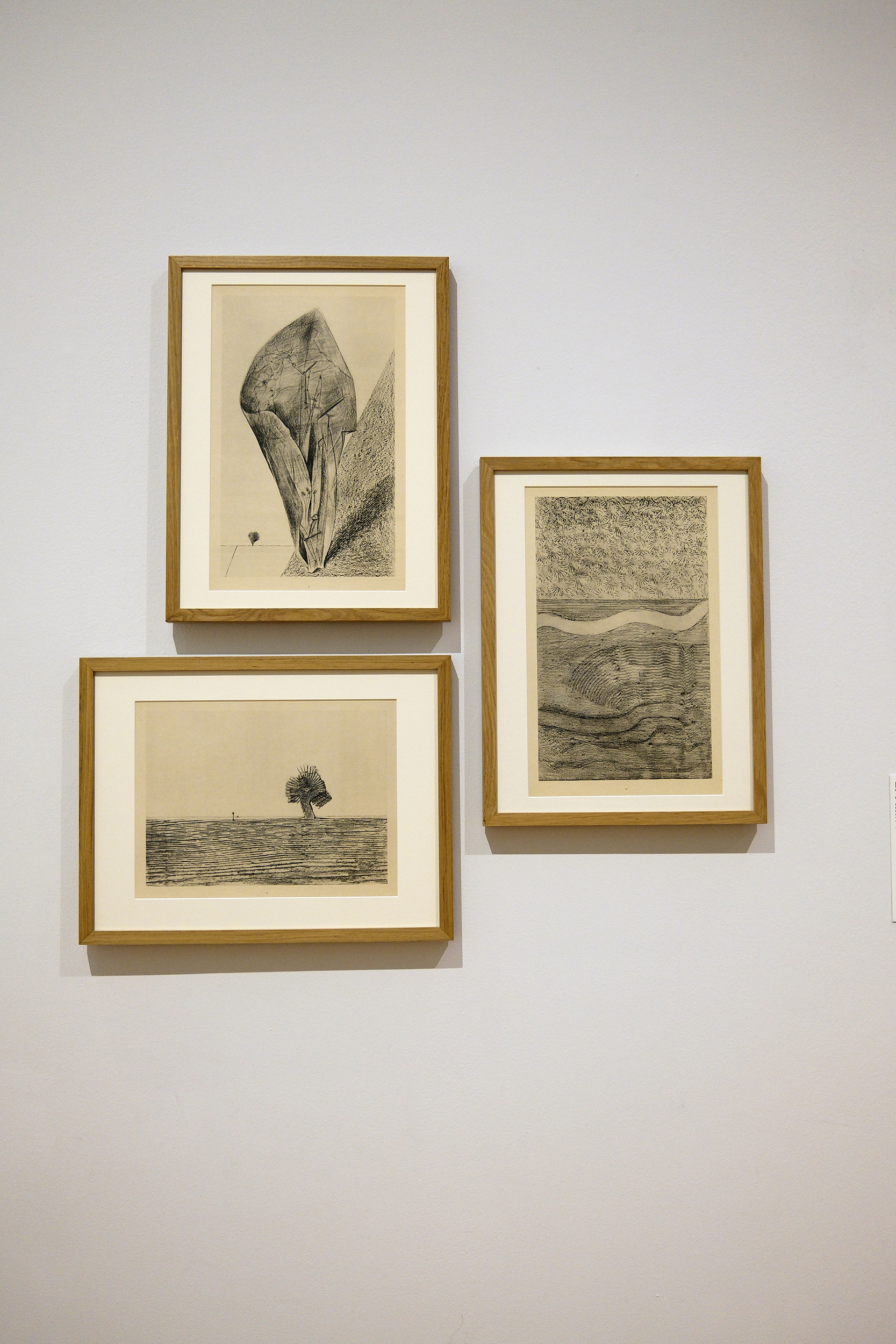
In counterpoint, Jean-Baptiste Ganne's Windhandel (Amsterdam 1637/Athens 2008) confronts floral ornament and political revolt, while David Ryan's Le Chasseur de Trèfles and Marie Denis' Le Divan place nature at the heart of personal stories. Plants are also featured in prints by Max Ernst and Raoul Dufy. Two video works frame this unbalanced landscape: in Jean-Claude Ruggirello's Jardin égaré, a horizontally suspended almond tree in bloom slowly rotates. Rose Lowder, on the other hand, films the flowers at close quarters, in a luminous choreography of life, celebrating its fragile beauty.
Two major works shift the focus to a different kind of presence, that of the body in direct contact with nature: Gina Pane's Terre protégée III, a radical gesture of inscribing the body in the earth, and Giuseppe Penone's Alpi Marittime, an intimate dialogue between a human hand and the growth of a tree. They open a transition to another geography - more arid, more serious - where the link to the earth is no longer one of fusion, but of loss, exploitation and destruction. The exhibition contrasts Sophie Ristelhueber's terrestrial scars with David Goldblatt's gutted mining landscapes, witnesses to injustice and resource depletion.
Through these works, Plants and People questions what remains to be preserved when the living has already begun. Far from offering a linear or nostalgic narrative, the exhibition invites us to take a closer look at the tensions of our time: our relationship with the living, our damaged memory, and the fragile gestures we make in an unstable world.
The animal at the Frac in Carquefou
Alevtina Kakhidze, Plants and people, 2025. Alevtina Kakhidze
At the Frac, the animal side of the exhibition unfolds around the theme of vulnerability. With Bestiary by Indian collective Raqs Media Collective. Golden silhouettes of endangered or extinct animal creatures draw up a melancholy inventory of a world in peril, consumed by ecological urgency.
This meditation on extinction and survival is echoed in Giovanni Benedetto Castiglione's Entry into the Ark (17th c.), in which the biblical deluge reflects our ecological concerns, and in Slavs and Tatars' reinvention of the Simurgh , a mythical, immortal chimeric creature that crosses eras to question the memory of past catastrophes. The exhibition thus weaves a web of metamorphoses, where man and beast merge in a disturbing play of mirrors. Anthropomorphism is no longer a mere device, but an invitation to identify, a way of probing empathy where the boundary between "us" and "them" dissolves. For if the animal is our double, perhaps its fate foreshadows our own - a cruel fable in which disappearance is no longer an abstraction, but an omen.
The exhibition at the Frac des Pays de la Loire in Carquefou runs from January 30 to April 26, 2026.
-
In photos
-
On video
Video pitch
Les deux commissaires de l’exposition reviennent sur les singularités des accrochages au Musée d’arts et celui au Frac des Pays de la Loire.




Curated by
Marie Dupas, head of contemporary art at the Musée d'arts de Nantes.
Claire Staebler, director of the Frac des Pays de la Loire
Vanina Andréani, head of the Pôle Collection-Exposition at the Frac des Pays de la Loire
Captions and credits
Elina BROTHERUS (1972 -), Portrait Series (Gelbe Musik with Sunflowers) from The Baldessari series, 2016. Photography: gb agency © Adagp, Paris, 2025