
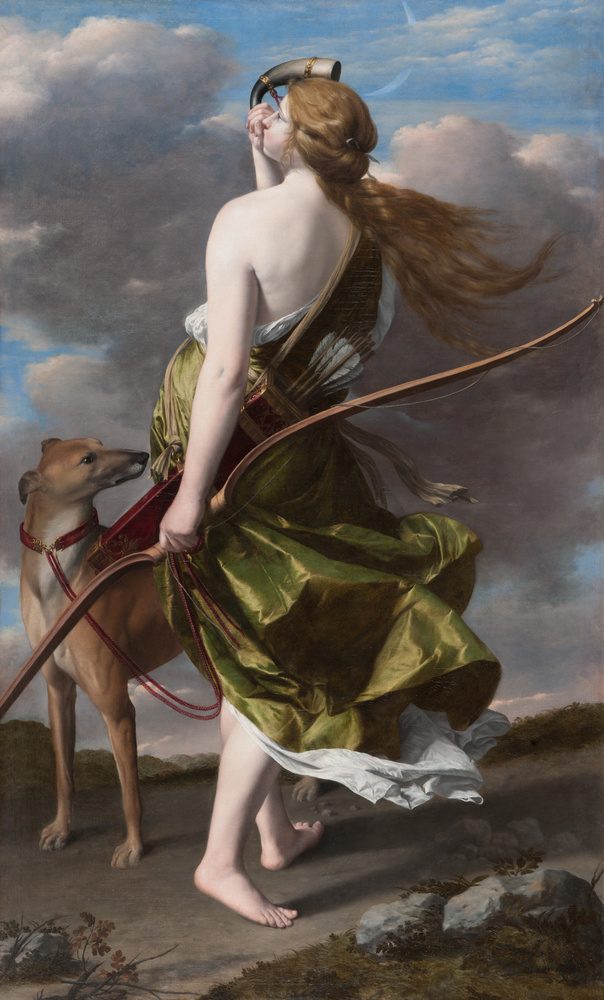
Orazio Gentileschi, Diana the Huntress, before 1631
Orazio Gentileschi
Diana the Huntress
This monumental work is one of the few surviving examples of the artist's work in France. Commissioned by a French ambassador, Orazio Gentileschi pays homage to the French Renaissance with his choice of Diana, the huntress goddess, a highly prized subject at the time. The Mannerist serpentine twist of the body is anatomically impossible to imitate! The enamel rendering of Veronese green, derived from a copper-based pigment, and the red lacquer on the dog's collar demonstrate the painter's technical prowess.
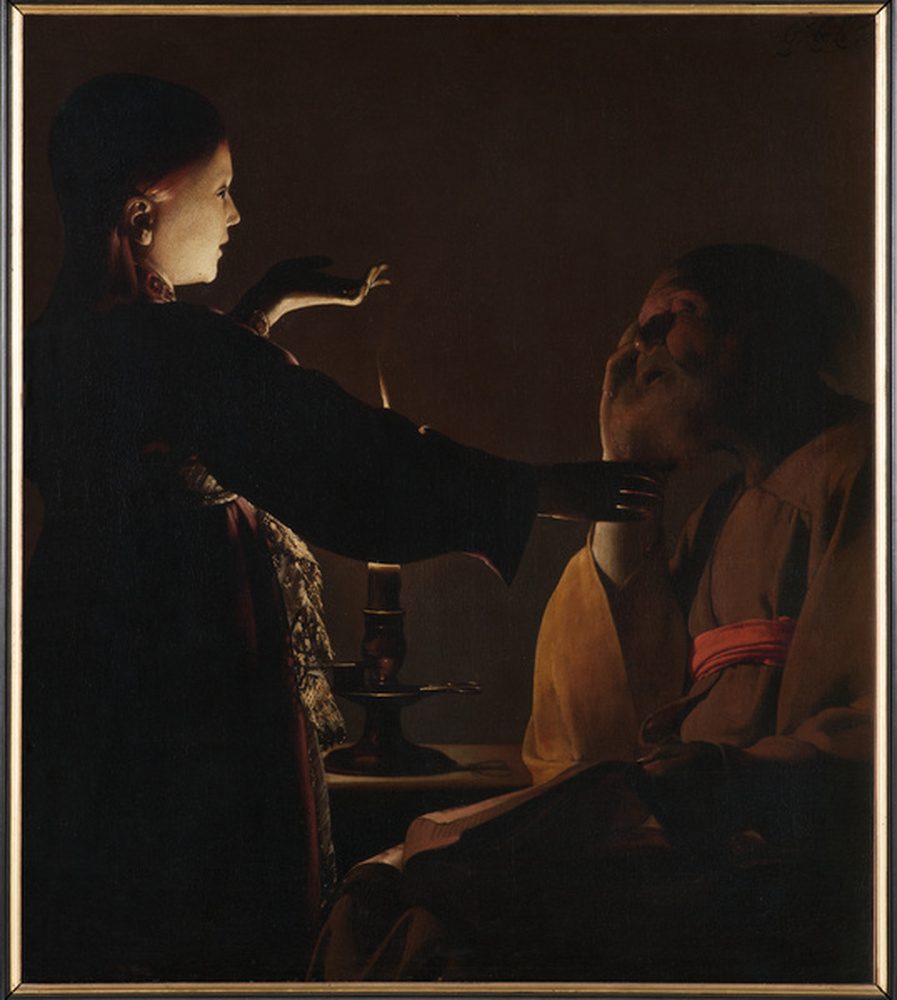
Georges de La Tour, The Apparition of the Angel to Saint Joseph , also known as The Dream of Saint Joseph, before 1631
Georges de La Tour
The Apparition of the Angel to Saint Joseph also known as The Dream of Saint Joseph
The Musée d'arts de Nantes is the second museum in the world after the Louvre to hold so many works by Georges de La Tour. The artist's strength and originality lies in his ability to paint a religious subject as an everyday scene. In this work, the angel is depicted without a wing and Saint Joseph without a halo. The light from a candle hidden behind the angel's arm embodies the sacredness of the painting. La Tour's depiction is realistic, almost photographic and timeless.
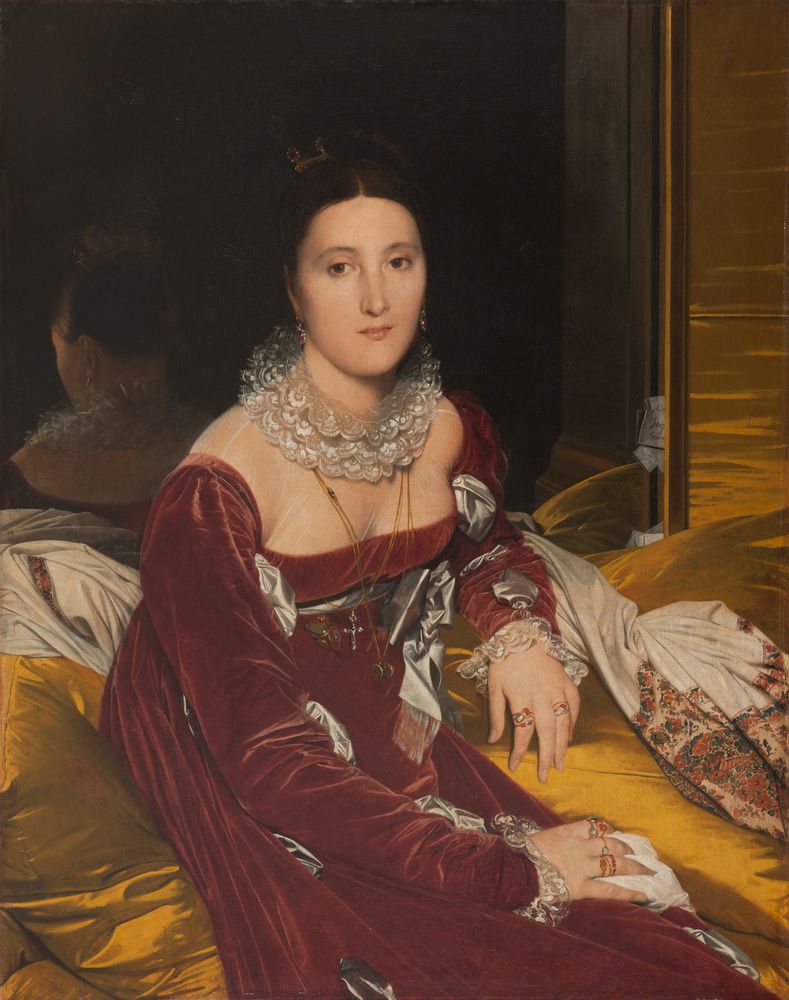
Jean-Auguste-Dominique Ingres, Portrait of Madame de Senonnes, 1814
Jean-Auguste-Dominique Ingres
Portrait of Madame de Senonnes
Influenced by his long stays in Italy studying the Renaissance masters, Jean-Auguste Dominique Ingres mastered drawing and color perfectly. His distinctive style is characterized by the deformation of the body and the interplay of curves. Behind the perfect oval of her face and the icy sheen of the velvets surrounding her, the portrait of Madame de Senonnes, a commoner turned viscountess, brilliantly sums up Ingres' art as a portraitist. Since its acquisition in 1853, this portrait has never ceased to fascinate artists and writers alike.
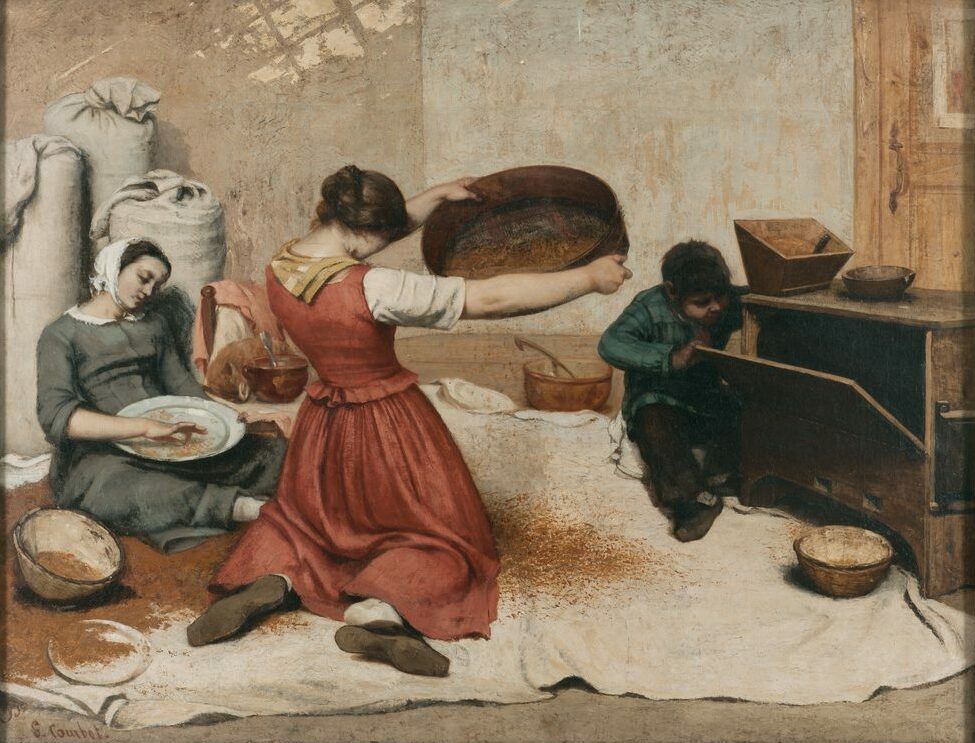
Gustave Courbet, The wheat sifters, 1854
Gustave Courbet
The Wheat Sifters
Criticized in his own lifetime, but admired by Paul Cézanne, this self-taught artist adopted a personal style and broke with the hierarchy of genres by painting scenes of daily life and the rural world on large formats. In so doing, he elevated genre scenes to the status of history painting. In this major work evoking the drudgery of work, Gustave Courbet chose bold framing, monumental figures, realistic postures and a palette of ochres.
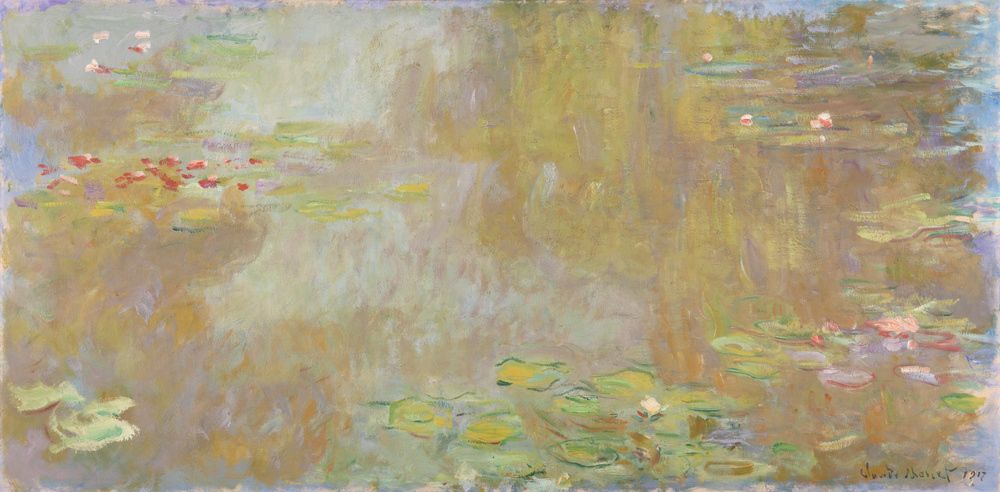
Claude Monet, Water Lilies at Giverny, 1917
Claude Monet
The Water Lilies at Giverny
Claude Monet is introduced to plein-air painting by Eugène Boudin. The brushstroke is visible and rapid, the colors pure. Monet seeks to paint light reflections rather than form. This choice was widely criticized in the early days of Impressionism. After the Haystacks and Rouen Cathedral series, the water lilies painted in his garden at Giverny became his favorite subject. Until the end of his life, he painted almost 300 pictures on this theme.
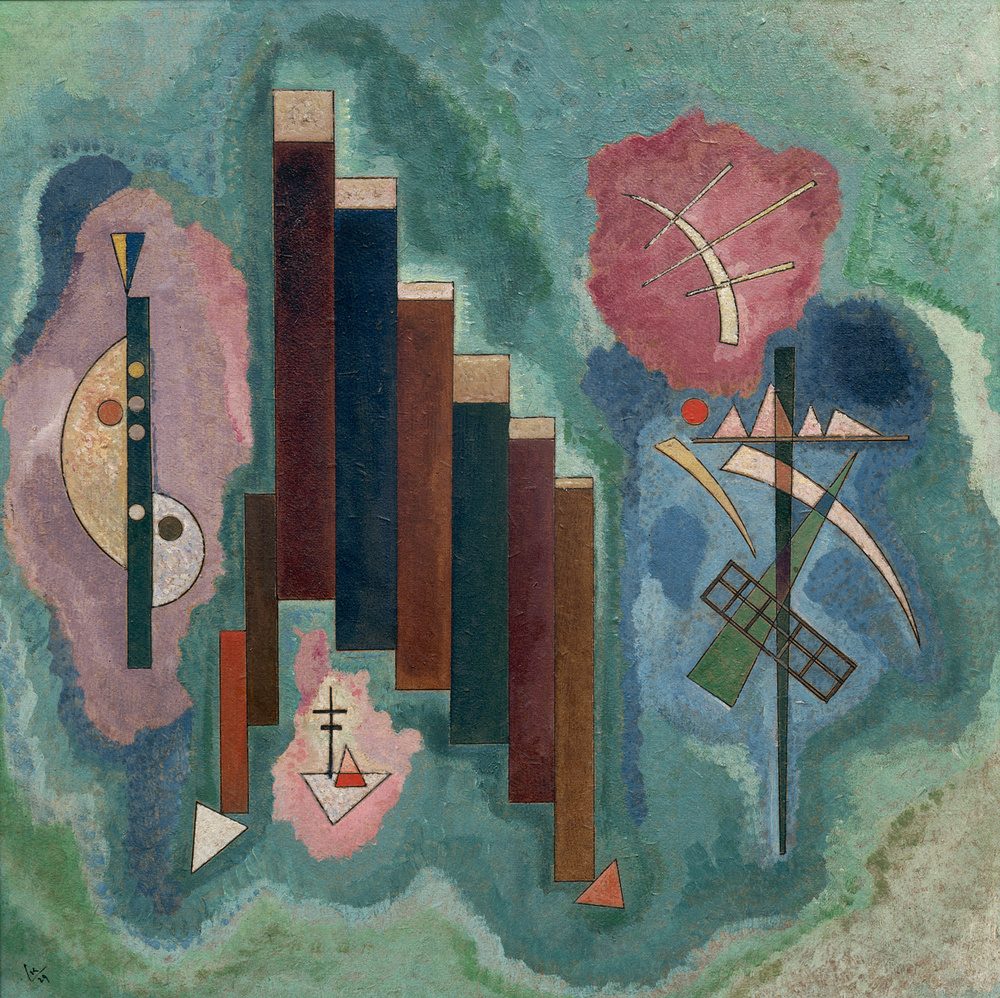
Vassily Kandinsky, Herunter 476 (Downwards), 1929
Gérard Blot - Agence photographique de la RMN
Vassily Kandinsky
Herunter [Down]
In Moscow, Vassily Kandinsky discovers a work from Claude Monet's Les Meules series: it's a revelation, he becomes a painter! In the early 20th century, he abandoned figurative painting for abstract art. His research focused on shapes and color harmony. The museum has 13 works by the artist dating from the period when Kandinsky was teaching at the Bauhaus school in Germany, from 1922 to 1933. Herunter 's geometric shapes and colors seem to vibrate in halos.
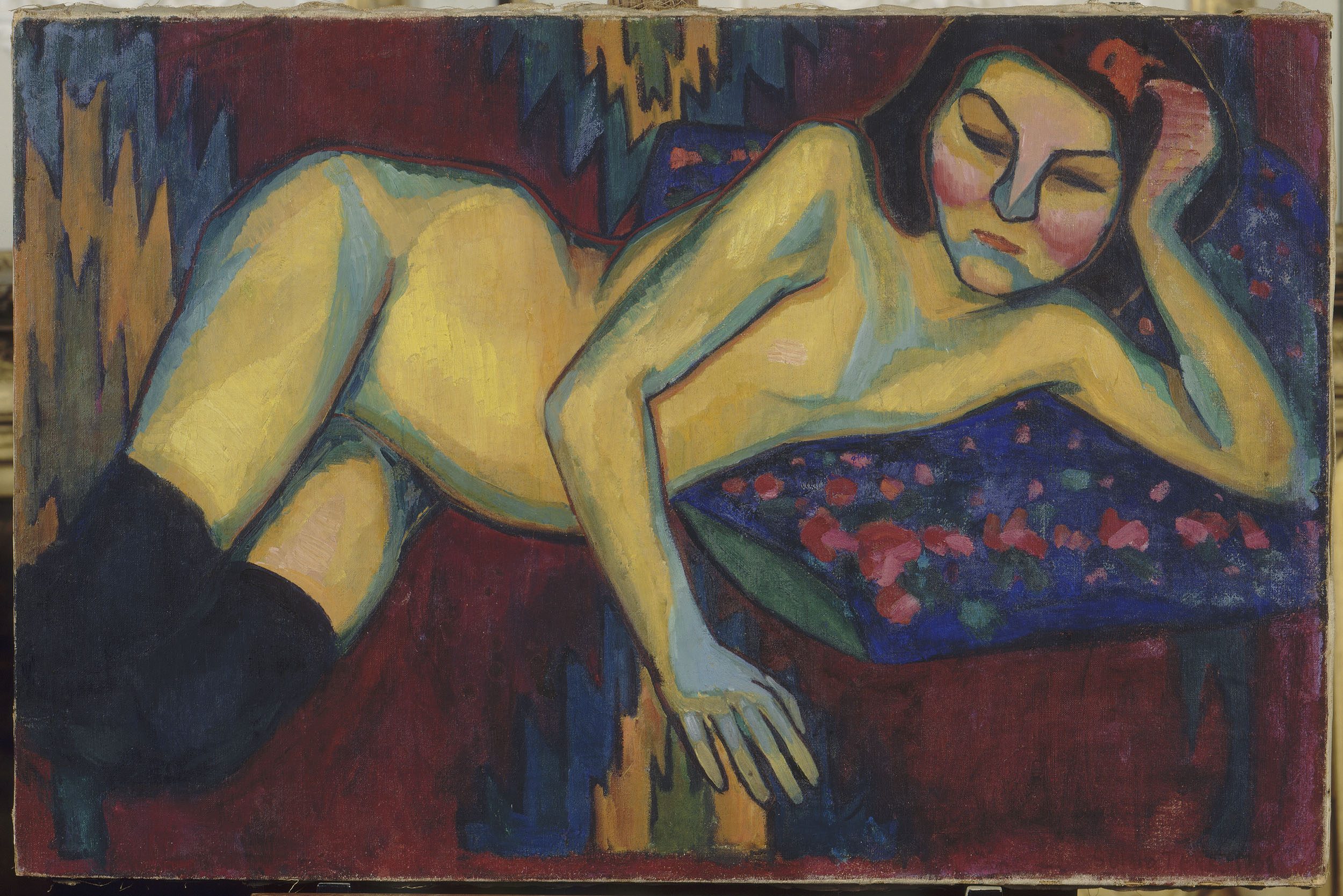
Sonia Delaunay, The Yellow Nude,1908
Pracusa S.A., photo: © Christian Jean/Agence photographique de la RMN
Sonia Delaunay
The Yellow Nude
Close to the European and Russian avant-gardes, Sonia Delaunay was resolutely modern. From figuration to abstraction, her research into color and the decomposition of light interacted with that of her husband Robert Delaunay. At the beginning of the 20th century, women painters took up the subject of the female nude, hitherto the preserve of men. It became a pretext for modern experimentation. Bright colors and the choice of yellow for the female body gave color a new expressive role.

Anish Kapoor, Sister, 2005
Adagp, Paris 2023
Anish Kapoor
Sister
Anish Kapoor emerged on the international scene in the 90s as a prolific contemporary visual artist. Earth-sky, matter-spirit, light-dark, visible-invisible, conscious-inconscious, male-female and body-soul dualities are recurring themes in his often monumental works and installations. The work combines monochrome and volume, questioning notions of space, inviting the viewer to move and offering a plurality of viewpoints.
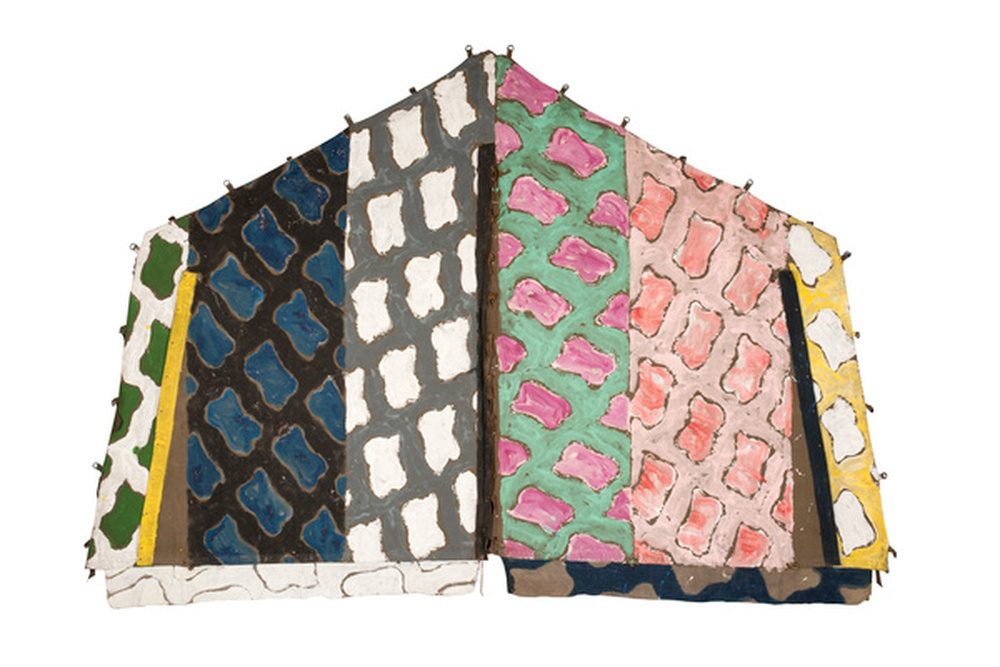
Claude Viallat, Untitled, 1936
© Adagp, Paris 2023
Claude Viallat
Untitled
Co-founder of the Supports/Surfaces group in 1969, Claude Viallat freed himself from the traditional format of painting and stretcher to focus on the support and use of color, which then became the central object and subject
of the work. Here, military tent canvas replaces traditional canvas, while the choice of motif and its repetition create a regular rhythm. The absence of a title reflects a desire to let the work exist for its own sake, without seeking a narrative.
Permanent collections
The collections of the Musée d'arts de Nantes have been built up over time, notably through the acquisition of works by living artists. Purchased on the art market, donated or bequeathed, the collections today comprise over 14,000 works in four categories: ancient art, 19th century, modern art and contemporary art.