From conservation, collections and exhibition production to public relations, communications and general administration, find out more about the museum's professions and team.
Conservation department
The conservation department promotes and disseminates the collections. To this end, the curators and collection managers design and implement temporary exhibitions and define the layout of the permanent collections. They oversee conservation policy and the restoration program, and supervise the inventory and recoiling of the collection for which they are responsible. They enrich documentation, research and publications on their collection. They monitor and propose acquisitions in their field of expertise.
These collection managers are supported by an assistant.
The conservation department also includes the library and art files.
The library of the Musée d'arts de Nantes is a research library specializing in the arts.
It contains catalogs of the museum's collections and related works, collected since the museum was founded. Generous donors have enriched the library, broadening the periods and artistic fields covered. To date, the museum library holds over 35,000 books, artists' files and magazines devoted to art from the 15th to the 21st century.
It welcomes students, teachers and specialized researchers free of charge and by appointment.
The Library Manager is also responsible for developing partnerships to make the Art Museum Library a recognized resource in the field of art history, preserving and promoting the collection, and welcoming the public to the library.
Artwork files: these form the documentary basis of the permanent collections and can be consulted by students and researchers. The person in charge of the works files enriches the documentation, carries out a documentary watch and integrates the archives.
Collections and Exhibition Production Department
The Collections and Exhibition Production Department is responsible for collections management and exhibition production (direction, scenography and installation).
This department has many strings to its bow: from the art department to the graphic arts studio, from the photography department to the technical team...
For the collections department, it carries out the following tasks:
- monitoring exhibition management and artwork movements,
- monitoring and managing reserves,
- implementation of preventive conservation policy,
- collection shots.
The collections department is involved in the inventory, periodic recoiling and marking of works.
The collections department also manages the museum's photo library, archiving inventory images and tracking photo requests both internally (public services, communications department, etc.) and externally (responding to requests, invoicing, etc.). The museum photographer also takes photos to enrich the photo library (images of works, exhibitions, spaces, etc.) and sometimes videos for exhibitions or communications.
During exhibitions, the collections department assists the exhibition curator in all matters relating to the movement of works (transport, hanging, unhooking, loan contracts, etc.).
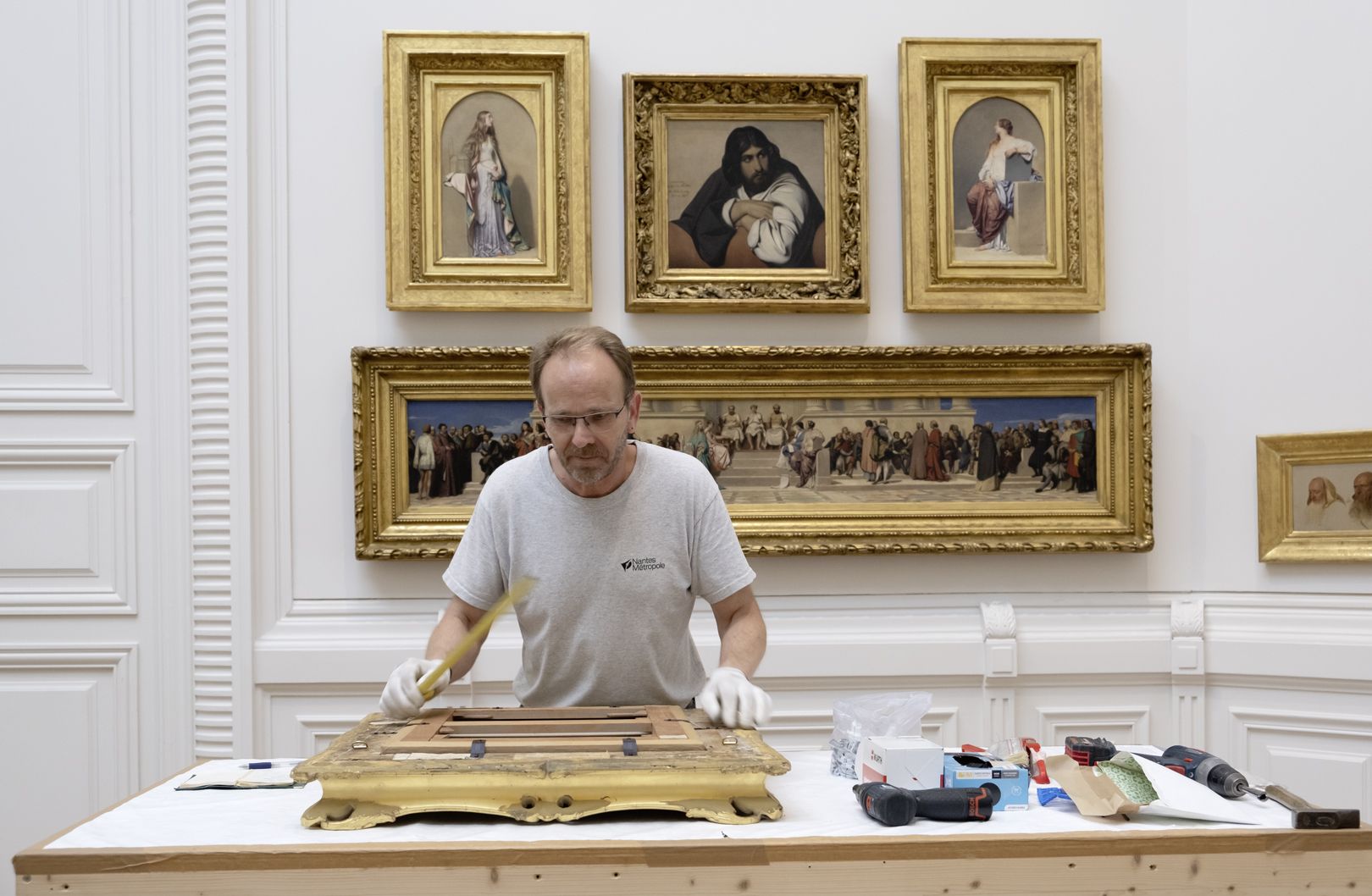
The technical department includes various trades: carpenters, painters, electricians, hangers. They are involved in setting up (creation of scenography, furniture, etc.), dismantling exhibitions, and handling and transporting works of art.
Audience Services
The Visitor Services department designs media tools for the permanent collections and temporary exhibitions. The term "mediation tools" is used to refer to visit assistance documents, educational workshops, any other type of educational tool, game booklets, workshops and events, etc.
The department's mediators/lecturers define and develop guided tours of the permanent collections and temporary exhibitions, and carry out the majority of these tours themselves. Particular attention is paid to school groups, for whom a special offer has been developed. Schoolchildren benefit from a dedicated visit slot (mornings from 9 to 11 am), although visits are possible throughout the museum's opening hours.
The visitors' service also develops specific projects, often in partnership with others, to attract all kinds of visitors to the museum.
It also designs and organizes a program of events linked to the permanent collections and temporary exhibitions: concerts, readings, performances...
Last but not least, the visitors' service handles reservations for school and group visits. Staff in this department are also responsible for managing the museum's switchboard, greeting visitors in the staff offices and distributing mail.
Communication department
The Communications Department develops and implements the museum's communications strategy and plans. It carries out communication initiatives to promote the museum as a cultural institution, as well as its collections.
It promotes and enhances temporary exhibitions, mediation activities (workshops, tours, etc.) and cultural programming (evening events, concerts, etc.).
It publicizes the museum's major events (Student Museum, Heritage Days, Museum Night, etc.).
It manages print, web and event communication tools: posters, flyers, advertising, website, social networks, etc. It has an active public relations policy with journalists, web influencers, media partners and sponsors.
It is built around four competencies:
- Head of department: communications strategy for the museum and temporary exhibitions, public relations (press, media partnerships, sponsorship) and management,
- Digital communications manager: social networks, website, newsletter, web products,
- Communication manager: design and follow-up of print and web communication plans, communication tools and actions, press and media relations,
- Graphic designer and production manager: graphic design of communication tools, media plans, monitoring of document production and distribution, signage (exhibition, museum).
General administration
General Administration oversees four departments:
- finance/accounting/human resources department,
- reception service,
- the technical/safety department,
- space rentals.
The Finance/Accounting Department prepares and implements the museum's budget. It prepares the budget and monitors its implementation in order to propose any necessary adjustments. It places orders and prepares invoice payments. It monitors ticketing revenues.
It also organizes public procurement and competitive bidding for all museum purchases requiring it.
The human resources department manages the museum's payroll budget. It organizes recruitment in conjunction with Nantes Métropole's central human resources department. It identifies training needs and oversees their implementation. It monitors the implementation of measures relating to working conditions, health and safety.
Reception staff welcome, inform and guide visitors to the museum, both when issuing admission tickets and in the galleries.
The head of this department is responsible for the quality of reception and oversees the outsourced surveillance contract.
The person in charge of space rentals manages the "commercial" relationship with companies wishing to privatize certain areas of the museum (hall, auditorium) outside museum opening hours.