The Musée d'arts de Nantes has many missions. To ensure that today's and tomorrow's visitors enjoy a unique experience, the museum's teams are committed to the four main themes that define its missions. The Musée d'arts is responsible for preserving and enriching, for posterity, collections of works of art from the 13th century to the present day, but also for helping all audiences, through a wide variety of means, to perceive their beauty, meaning and power.
The presence of contemporary art in a collection that spans 9 centuries of creation enables the museum to combine art and life in its exhibitions and teaching, while highlighting the spirit of the place (an architecture that is both classical and contemporary, monumental and enveloping). The museum is also deeply rooted in the city of its birth, while remaining open to the world.
To explain these missions, there's nothing better than a professional to talk about them. Talk to department heads to find out the ins and outs of these key areas at the Musée d'arts de Nantes.
An expert at work
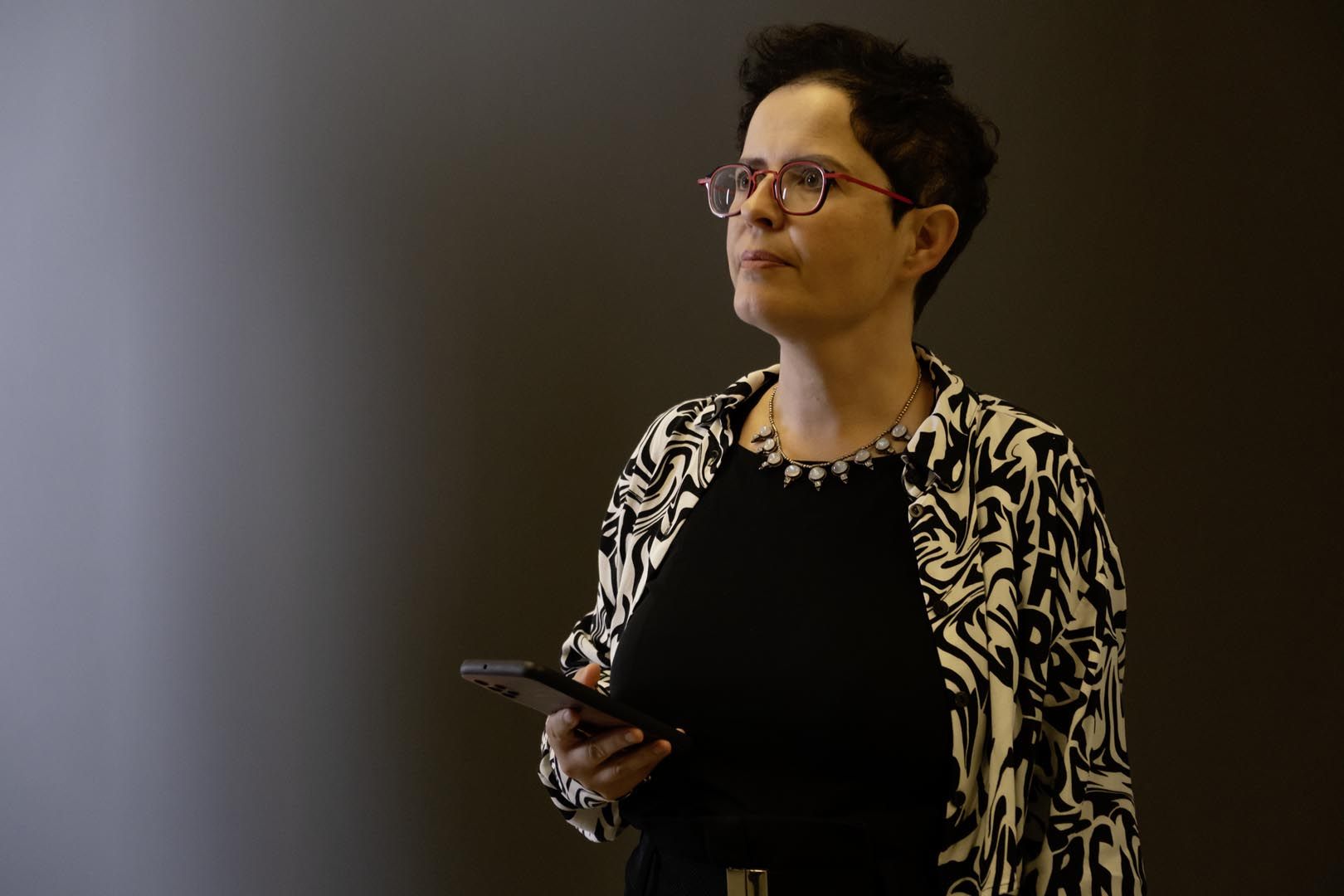
Adeline Collange-Perugi is curator and head of the ancient art collection. Her job is to preserve, study and appraise works of art, design exhibitions and enrich the collections. So we asked her a few questions.
Interview with Adeline Collange-Perugi
Curating and managing a collection means wearing many hats?
At the Musée d'arts de Nantes, each collection manager is responsible for a chronological period (ancient art, 19th century, modern art and contemporary art). In fact, we wear two hats: we're responsible for hanging and studying the permanent collections on display in the galleries, but we're also project managers and curators for certain temporary exhibitions.
Our job is to provide scientific expertise on the museum's collections. To ensure that works of art are passed on to future generations, in collaboration with the management, we have to ensure that they are in good condition and well preserved under appropriate lighting and climatic conditions. It may sometimes be necessary to call in specialized restorers and determine with them the best restoration protocol to "cure" damaged works.
For temporary exhibitions, we think about the themes, research the works and draw up a synopsis, a bit like in the cinema, to engage with the visitor.
For collections and exhibitions, a bit like a detective, the curator is a researcher who finds works to acquire or exhibit in order to advance the history of art, helping to shed new light on artists and artistic movements...
You say that the exhibits and display of the permanent collections often borrow a theme that speaks to visitors. Could you be more specific?
Indeed, the museum has chosen to connect with everyday life and the issues of today's world. Enhancing the value of our collections means involving visitors in their visit, and renewing the way we approach and display our works. For example, we've created themed rooms in the museum's itinerary. A theme like the different meals of the 17th century allows us to talk about both sacred meals and the feasts of yesteryear, while observing the difference between the still life of an Italian or Dutch painter. In this way, we discover the different artistic currents in a more playful way. The same is true of the 18th-century look at childhood and the family, and of major temporary exhibitions such as Le Voyage en train and À la mode. What's fabulous is that visitors can seize the exhibitions according to the theme that appeals to them: the history of the train, the beauty of an 18th-century French dress or the composition of a painting.
Every experience is personal, and not everyone comes to the museum for the same reason. You can come just to stroll around, or to learn a great deal (with our commented cartels, for example). We've also deliberately included some "anachronistic" works in our tours, such as 20th-century works in the older tours. Some of these can be quite intriguing for visitors, if only to ask, "What's this work doing here? What brings them together across time? What makes them different? What do they call out to me when I see them together?
Visitors are never given an absolute discourse; they can construct it from what is offered. So it's subjective, sensitive, more or less scientific, more or less funny or aesthetic too. The important thing is to have a personal experience with the works.
You also have to enrich the collections. What does this mean?
Like the museum, the collections are alive and growing, enriched not only by purchases from galleries and public sales, but also by bequests and donations, which we are working on. In modern art, for example, we received a very fine donation in 2024 from a couple of gallery owners from Nantes, Jean and Jeannette Branchet. This enables us to rethink our approach to the collections and the visitor experience.
Works in motion
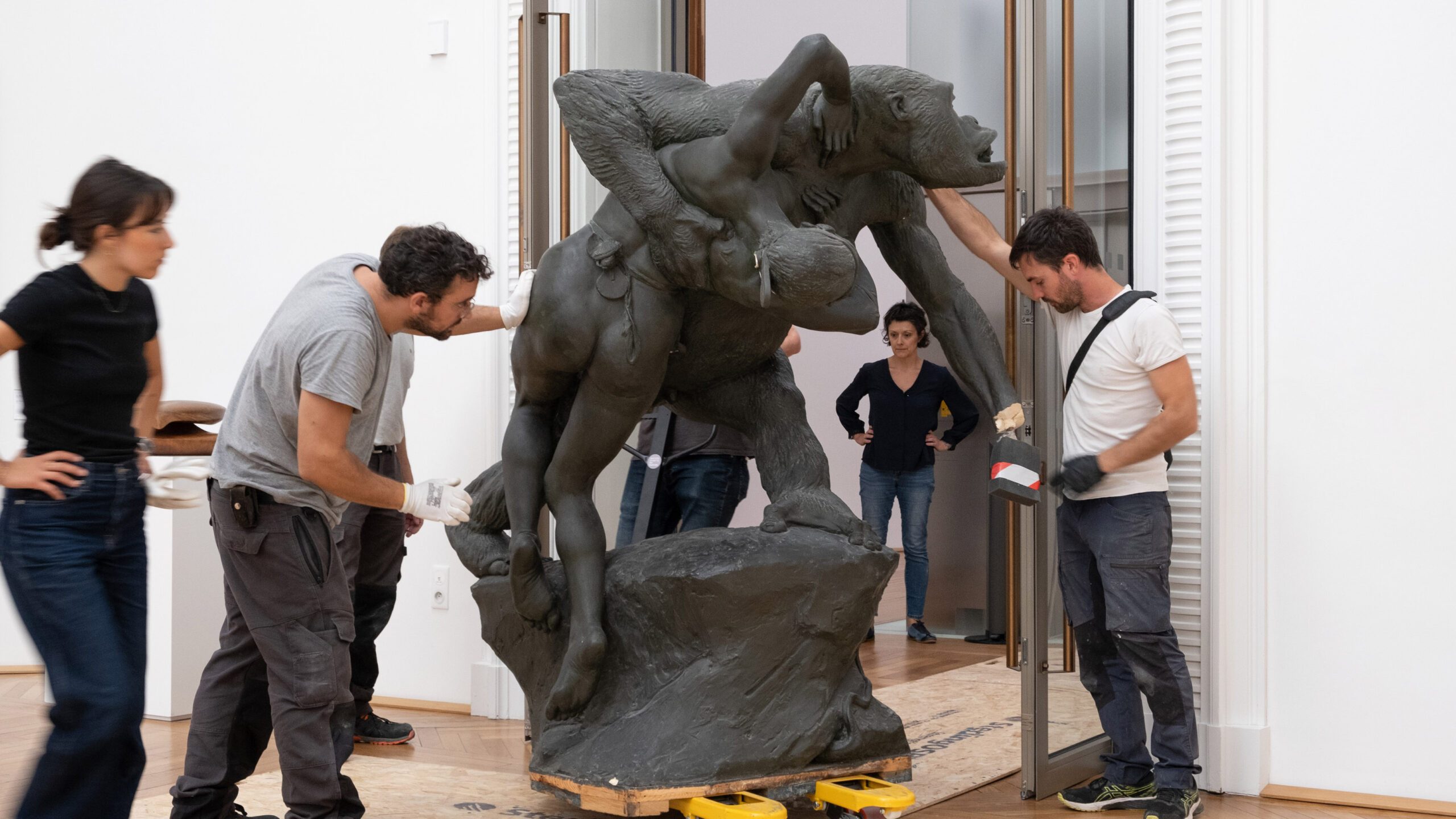
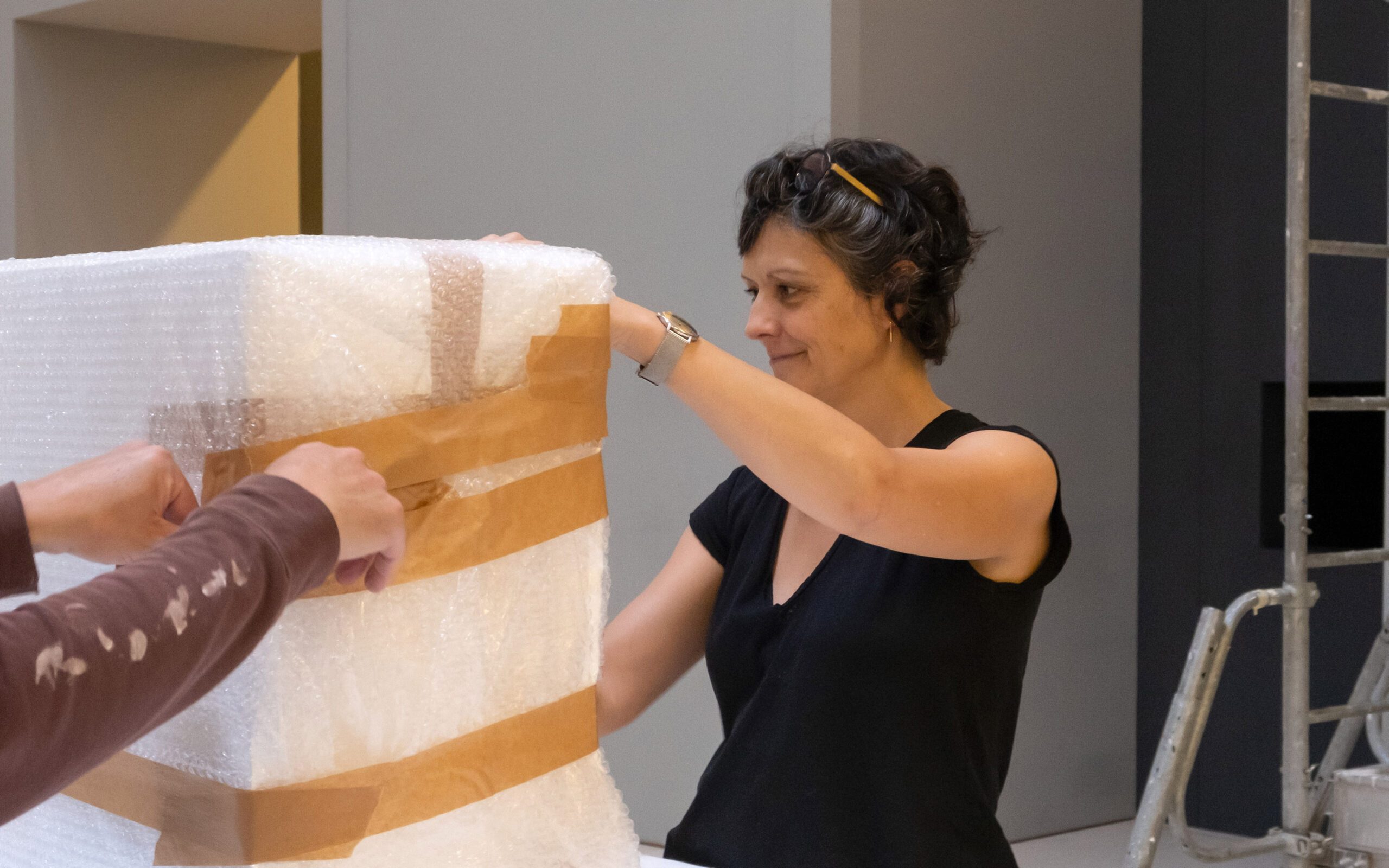
Céline Rincé-Vaslin, Head of Collections and Exhibition Production, is the orchestral conductor of the collections and technical departments. Her missions range from conservation to accessibility of the collections. And in between? Lots of other things, as she explains.
Interview with Céline Rincé-Vaslin
The Musée d'arts de Nantes receives many requests to loan works. How can we accept them without impacting too much on the visitor experience?
We lend out over a hundred works a year, and in the life of a museum, these loans are essential for new temporary exhibitions, both for the museums we lend to and for ourselves. In fact, they enable us to maintain good relations with other establishments, and eventually to call on them for our own exhibition projects.
In order to decide whether a loan is appropriate, we study a number of points with the conservation department: the scientific interest of the exhibition, the conditions for displaying the works in terms of security, safety, climate, etc., especially for old, fragile works. To grant a loan, the work must also be in good condition and not involved in another project.
But there are also other considerations to take into account. When we are asked to loan masterpieces, such as our three Georges de La Tour works which hang in the permanent exhibition and are used extensively for guided tours, but are also eagerly awaited by museum visitors, this is very rarely an option, even if all the criteria are met. But if a loan is refused, an explanation is always given.
Isn't the journey of a work of art always a little perilous?
As soon as you handle a work of art, you put it at risk. These movements are therefore highly regulated and require experience. Before departure, we carry out an inspection of the work. If necessary, because of its fragility, its insurance value or the complexity of its installation, we accompany it (this is called convoying) and check at each stage that everything is going smoothly. We don't convoy every work on loan; that would be extremely time-consuming. But whether or not the work is conveyed, there is always a condition report after unpacking to check that there has been no damage.
Are you involved in the conservation of the works?
Yes, we exhibit around 900 works at the museum, but our collections comprise more than 14,000. Our department is also in charge of the reserves, the storage of the collections and their recolement, the purpose of which is to check, on the basis of inventories, the location and condition of the works in our collections. There's a whole list of criteria to check! We document and manage all the works electronically, and thanks to this meticulous work, all the collections can be found on Navigart, an open-access Internet platform that anyone can consult at their leisure.
A wide range of actions for the public
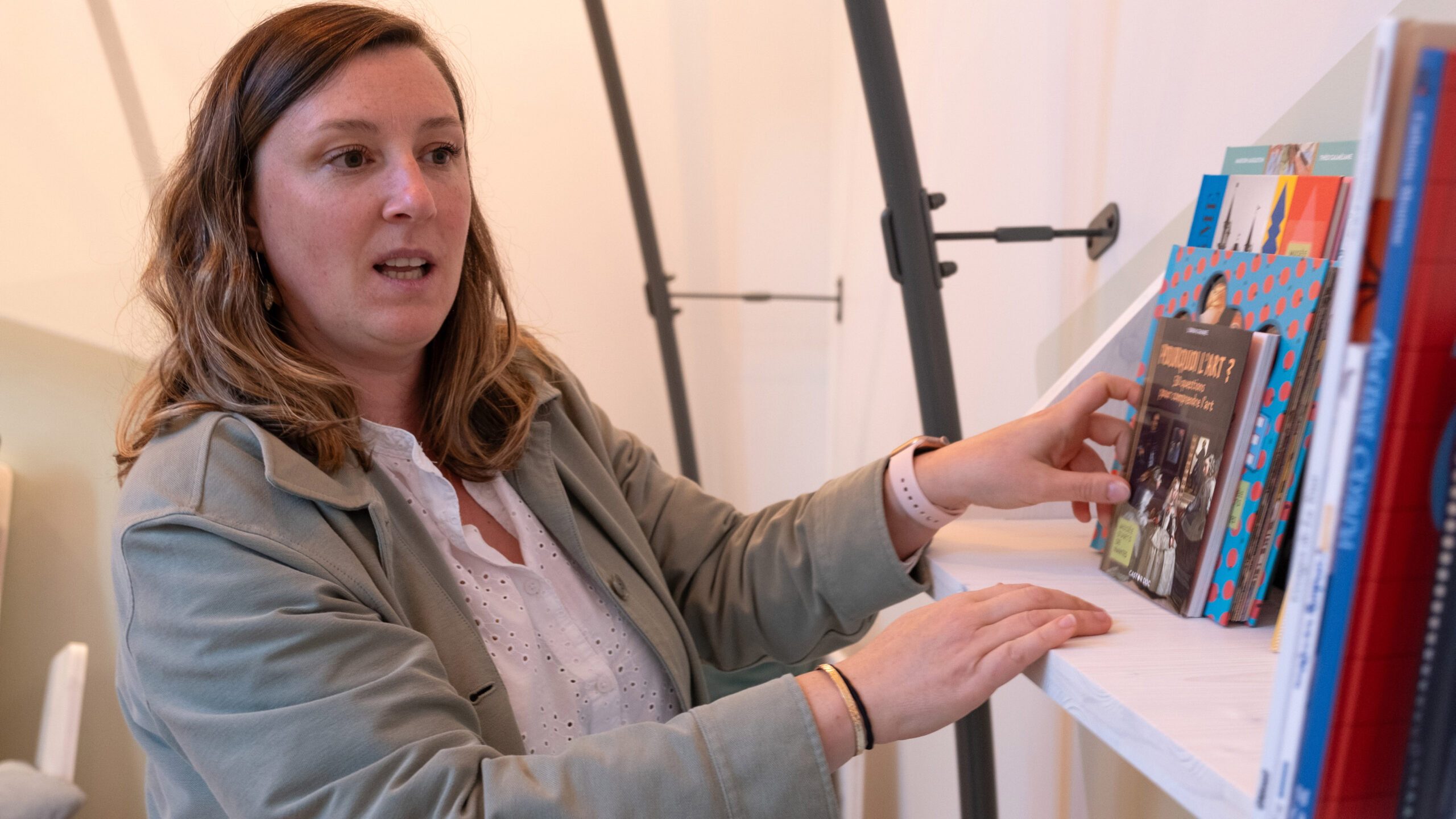
Nathalie Steffen is in charge of the visitor services department. From guided tours to workshops, from indoor events to out-of-home activities, the department offers a wide range of initiatives. A meeting open to all audiences...
Interview with Nathalie Steffen
Whether it's individual visitors, school groups or people who are more remote from the public, is the public service really on all fronts?
Yes, the aim of the Visitor Services department is to ensure that everyone finds their place in the museum. To achieve this, we have several strings to our bow... Firstly, there are the mediation tools available to all: texts in the museum's rooms, the tour application, booklets and other family tools. These tools facilitate visits to temporary exhibitions and permanent collections. But we don't stop there. We also offer activities, programmed events, partnerships and educational resources for schools. In addition to our offer for schools, we also carry out activities aimed at students. As part of the "Students at Work" and "Student Museum" programs, students take over the museum for an evening and become its ambassadors. It's programming by young people, for young people!
The aim is to take into account the specific needs of a heterogeneous public, so that everyone can find their way around and enjoy coming to the museum.
What does that mean?
We offer a varied program of guided tours and workshops for families, day visitors and art enthusiasts alike. We offer different ways of looking at the works: through drawing or play, through direct encounters in the galleries with dance, music, performances, poetry... These different ways of looking at the works offer a different approach, a different vision that makes us feel legitimate, whatever our affinity with the museum.
To feel legitimate... That everyone has a place in the museum?
Yes, the idea is that everyone should be able to enjoy their own unique experience. The mediator acts as a go-between for the work and the visitor, transmitting knowledge but also helping to raise awareness of the fact that we can all make the most of our skills to approach the works.
For more remote audiences, we rely on existing structures and mechanisms to reach out to them; relays from the social and medico-social fields to bring in an audience that would not actually come on its own. This is also true for early childhood; people are wrongly convinced that toddlers are not welcome at museums. It's also true for prison inmates and patients at the Centre Hospitalier Universitaire de Nantes... It's important to contribute to the respect of cultural rights. Part of our work involves working with relays who, themselves, don't necessarily feel entitled to come to the museum. So we need to inform, facilitate and explain.
At the Musée d'arts de Nantes, we really want to be a welcoming and accessible place. A place where you can stroll or just take a break; a breath of fresh air in the city, just like the Jardin des Plantes.
From curiosity to research
Mikaël Pengam is in charge of the museum's library. From documentary research to welcoming the public and enriching the collection, the library's missions are as useful to the museum's various departments as they are to visitors in search of references. Find out more.
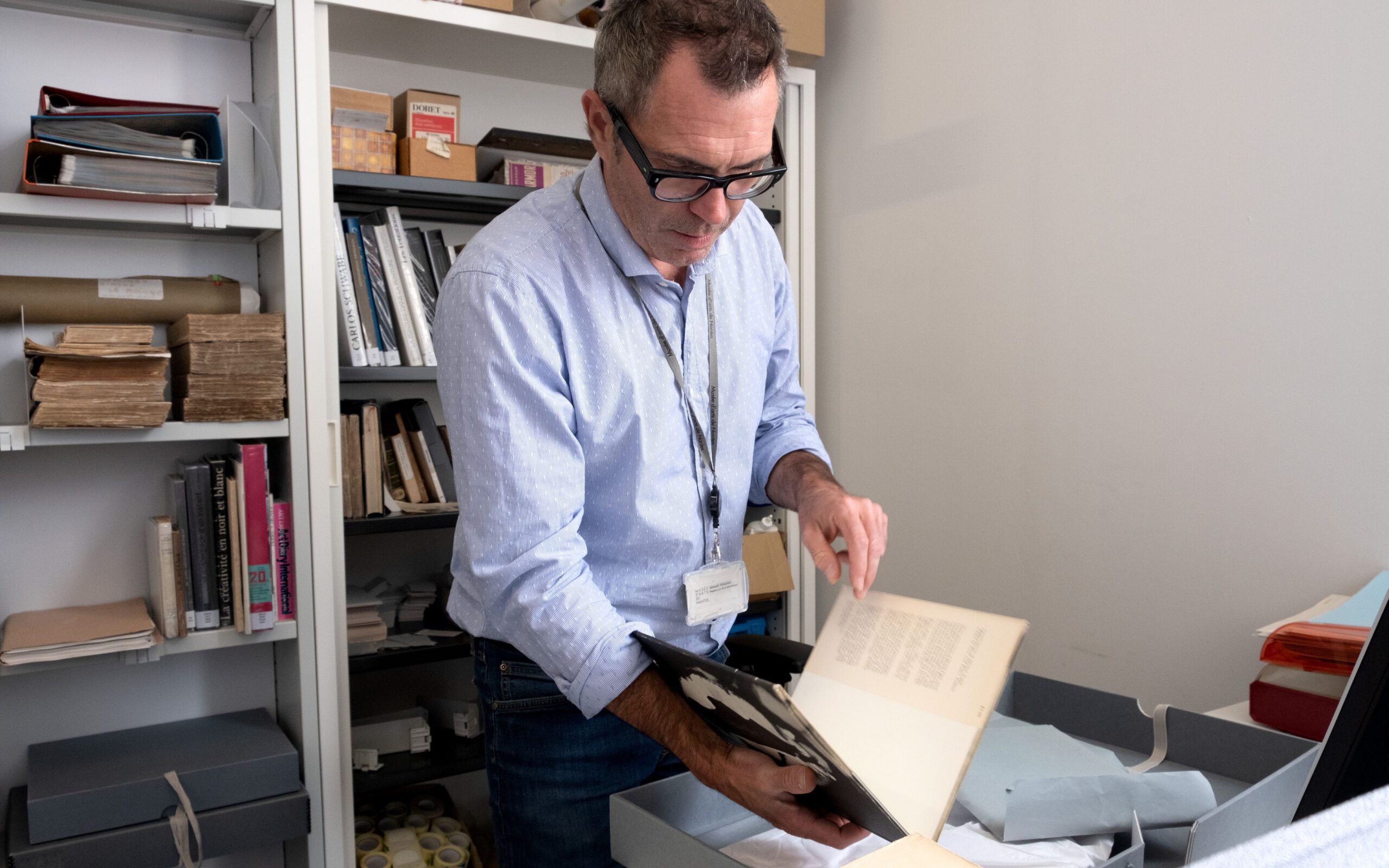
Interview with Mikaël Pengam
What types of works make up the Musée d'arts de Nantes library collection?
The museum has always had a library, but in the past it was reserved exclusively for internal use. The collection has therefore grown over the decades, and today we have over 35,000 art books and essays, as well as around 200,000 documents such as posters, invitation cards, press cuttings and other magazines, some of which have been collected since 1850. That's the equivalent of around 600 linear metres of shelving!
We also have correspondence, such as that of Gaston Chaissac, or a letter from a count who offered to house the museum's paintings in his château at the start of the Second World War.
The books cover the fine arts from the late Middle Ages to the present day, echoing the museum's collections. Today, most of them are selected for documentary research related to the museum's works and temporary exhibitions.
We also benefit from donations and international exchanges to enhance our holdings, and have works in many languages. The department also monitors the availability of valuable documents for acquisition. Recently, for example, we acquired a rather daring 1929 "almanac" by Man Ray, Louis Aragon and Benjamin Péret, and a 5-volume novel-collage by Max Ernst entitled Une semaine de bonté . These precious documents are inventoried as works of art...
A substantial fund... who can benefit from it?
In addition to the curatorial and public services departments, with whom we work closely, art history students account for around two-thirds of our visitors. The other third are mainly private collectors, curators, artists, independent researchers, professors and journalists. We also respond to many requests from a distance, notably for publications that will later enrich our holdings. It's a virtuous circle. And the library is open to all by appointment.
Are there any other unsuspected missions for a fine arts library?
We work closely with the University and its professors. It's important for students to know that they can consult books and documents that can't be found elsewhere. We also take part in art history symposia, and are part of the national network of art libraries. While our mission is to promote our collection regionally, nationally and internationally, the general public is also welcome, especially during the European Heritage Days, when we welcome them with open books and documents!