Book your ticket
Buy your museum ticket online or at the museum reception desk.
 Reservations strongly recommended at weekends, on public holidays and during vacation periods. Access to the exhibition is only guaranteed if you reserve a slot.
-
The exhibition
In the Chapelle de l'Oratoire, Valentin Ferré and Capucine Vever designed a bespoke acousmonium, a 16-speaker sound system with 4 subwoofers, to create a unique, enveloping, spatialized sound experience.
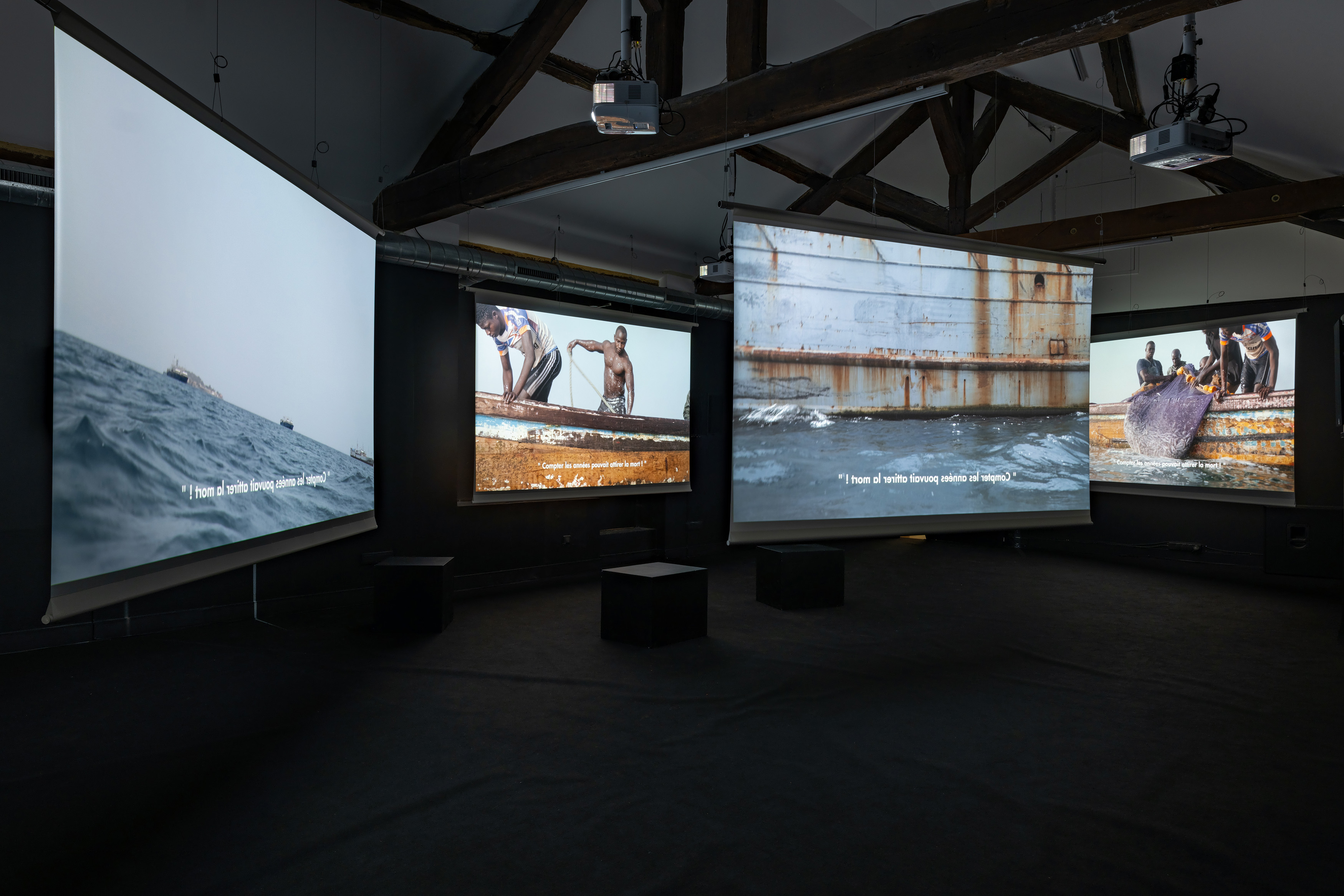
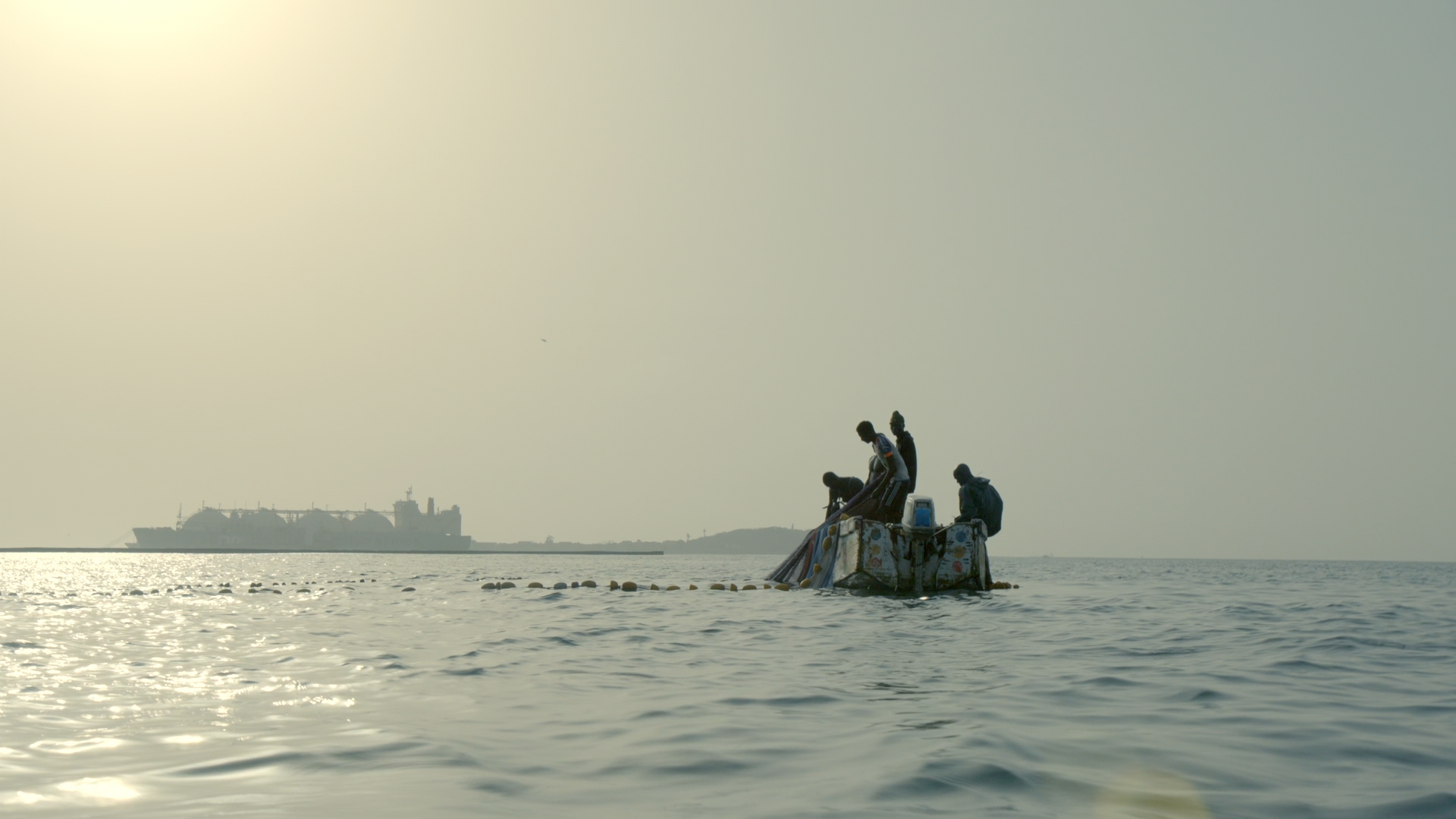
Each screen reveals a fragmented version of the film shot in the Bay of Dakar, Senegal. The viewer finds himself in the middle of the drift of a boat on the Atlantic, on the outskirts of the island of Gorée. Under Portuguese, Dutch, English and French rule in turn, Gorée was the largest slave-trading center on the African coast from the 15th to the 19th century. The film's point of view is that of the ocean, which, as its level rises due to global warming, is inexorably erasing the island and its history.
The ocean is the main character: its movements, its surf and its inhabitants are accompanied by the voice of singer-songwriter Wasis Diop. His narration in Wolof and French, and his songs inspired by the Lebou tradition, are combined with sound tracks by composer Valentin Ferré.To find out more...
Dunking IslandCapucine Vever, 2021.
Text by Patrice Joly, artistic director of Zoo center d'art contemporain (Nantes), co-curator of the installation presented in Nantes from May 10 to September 21, 2025.
Dunking Island is a reflection on the threat to Senegal's coastline posed by the global phenomenon of rising sea levels. Comprising a multi-projection system and an acousmonium deployed on six video screens and twenty sound sources, Capucine Vever's installation takes over the generous volumes of the Chapelle de l'Oratoire, a major venue for video art in Nantes. The island featured in this story is none other than Gorée, whose name echoes echoes of the slave trade that, for decades, organized the massive transfer of people to the colonies as slave labor for the planters. The city of Nantes, which played an active part in this trade, has been revisiting this past for some thirty years, through various landmark events, the most emblematic of which was the Les anneaux de la mémoire exhibition in 1992. The artist's proposal is part of this memorial movement, which aims to shed light on the city's role in this industry that made the city's fortune in the 17th century.
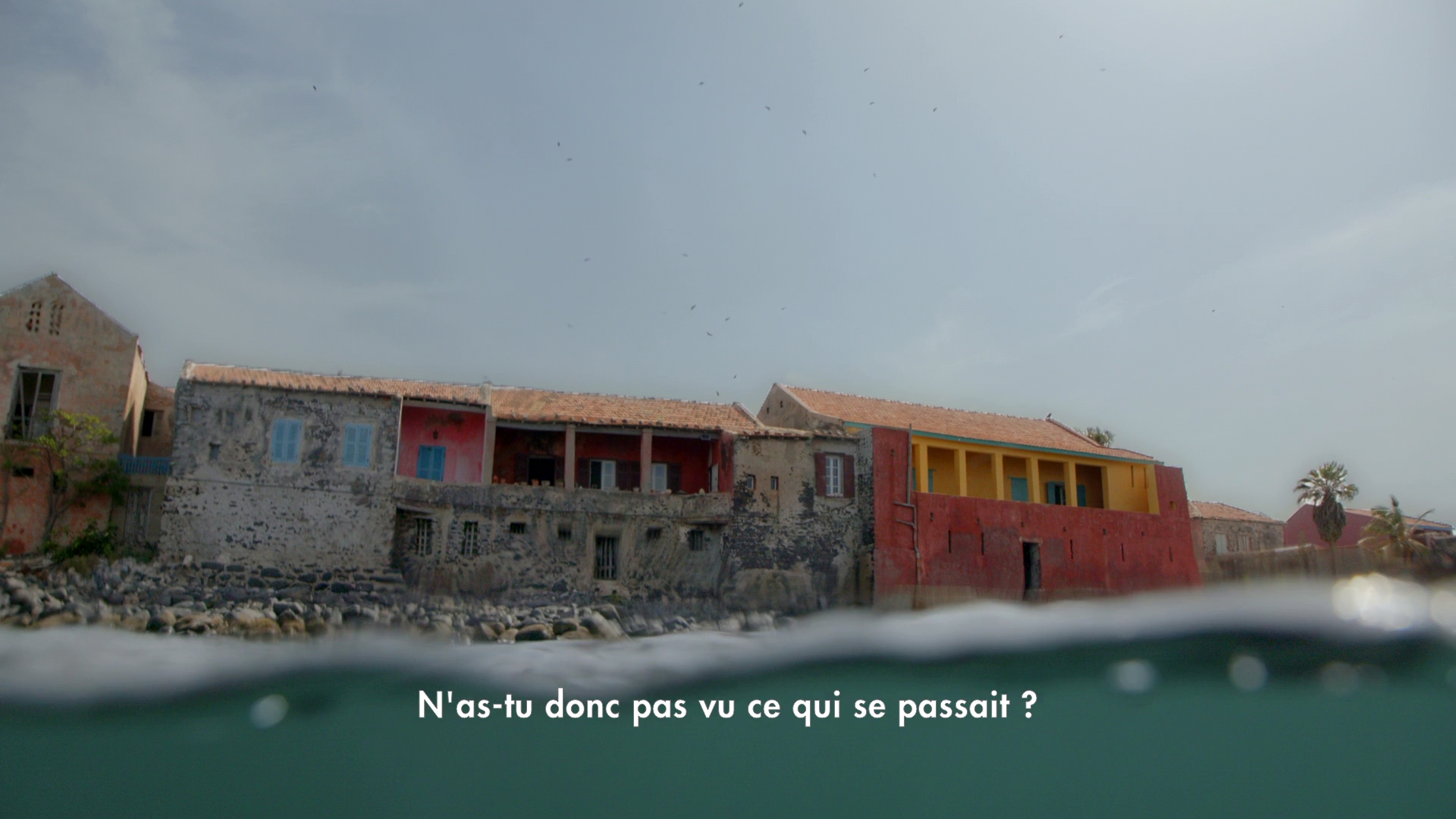
Dunking Island can also be understood as a slow immersion of the island, metaphorically referring to the devastating effects of the capitalocene and associated global warming. In striking contrast, Dunking Island alternates between shots of Lebou fishermen - an autonomous tribe already present before the arrival of the colonists - using traditional techniques, and those of the bows of factory ships ravaging the ocean floor. The underwater sequences make us aware of the scale of the plastic waste pollution that is transforming the coastline into a vast aquatic dustbin, where shimmering tropical fish are indifferent. Capucine Vever's film reveals the intensity of the damage to the island's shoreline caused by ever-increasing memorial tourism, which the country does not have the means to deal with, combined with dramatically rising sea levels. This growing damage is simply prolonging the effects of a globalized economy that dates back to the triangular trade boom.
With the planned sinking of Gorée, the disappearance of an irreplaceable island of memory is at stake. But the song that accompanies this filmic plunge into Atlantic waters is more an ode to the ocean than a victimizing pamphlet. Set to music by Valentin Ferré and carried by the voice of the great Senegalese singer Wasis Diop, from the Lébou people, infused with animist thought, Capucine Vever's film takes us on a modern odyssey where the recollection of ancient dramas rises to the surface of consciousness, mingling with the rumor of contemporary tragedies linked to migration. The resolutely slow pace of the video, in tune with the ebb and flow of the sea, brings us back to the ancient times that colonial fury has disrupted. Dunking Island cradles us in these interwoven narratives, where nostalgia is nowhere to be found, but where the graceful gestures of the fishermen, left to the fluctuating currents and moods of the ocean, simply stand out.
-
Capucine Vever biography
Born in 1986, Capucine Vever lives and works in Pantin. She develops contextual work, interested in notions of the invisible, the inaccessible and the imperceptible. Her creations draw their origins from the specific features of a territory, the human activitiesś that take place there and the representations of which it is the subject. She works from observations, scientific studies, maps, experiments and encounters to create a narrative that slips into fiction, a poetic work, a sensitive representation of societal issues. Between the visible and the invisible, from the gigantic to the infinitesimal, the artist absorbs and manipulates what is offered to our gaze to reveal what is hidden, and leave room for the imaginary.
She conceived Dunking Island during a residency at the Kër Thiossane art center in Dakar in 2021. The work was awarded the Prix Michel Nessim Boukris 2021 by the Fondation des Artistes.
Capucine Vever's work has been shown in various institutions in France and abroad. The artist is preparing her next solo show at Galerie Eric Mouchet for autumn 2025, and her work is also presented in 2025 in group shows at the Musée des Beaux-Arts de Caen, FRAC Poitou-Charentes, Jardin Botanique de Bordeaux, Galerie municipale Julio Gonzalez d'Arceuil, Fondation Grantham pour l'art et l'environnement (Québec), Instituto Tomie Ohtake de São Paulo and Centre culturel Canadien de Paris 2026.
The artist's first monographic catalog will appear in September 2025, co-published by Galerie Eric Mouchet and Zéro2 Éditions.
-
On video
Capucine Vever's pitch video
Capucine Vever looks back on her installation Dunking Island. A work created in collaboration with Wasis Diop for text and voice, and Valentin Ferré for original music and acoustic design. Programming and color-grading: Pierre-Yves Fave; Director of underwater photography: Léo Leibovici.


Dunking Island
Video and sound installation, 35 min
Text and voice: Wasis Diop
Original music and acoustic design: Valentin Ferré
Programming and color-grading: Pierre-Yves Fave
Director of underwater photography: Léo Leibovici
Produced by Futur Antérieur Production with the support of Institut français, CNC, Fondation des Artistes, Communauté d'agglomération Grand Paris Sud, Ville d'Evry-Courcouronnes, Ville de Dakar, Galerie Eric Mouchet, Centre d'art Image/Imatge, and Bel Ordinaire, espace d'art contemporain de Pau Béarn Pyrénées. Underwater filming was made possible with the help of Micelium Prod and Dakar's Océanium.
Installation curated by
Patrice Joly, artistic director of Zoo center d'art contemporain, Nantes.
Marie Dupas, head of contemporary art at the Musée d'arts de Nantes.
Captions and credits
Capucine Vever, Dunking Island (2022, 35 min) HD video, stills from the film ©ADAGP, Paris, 2024 / Capucine Vever