
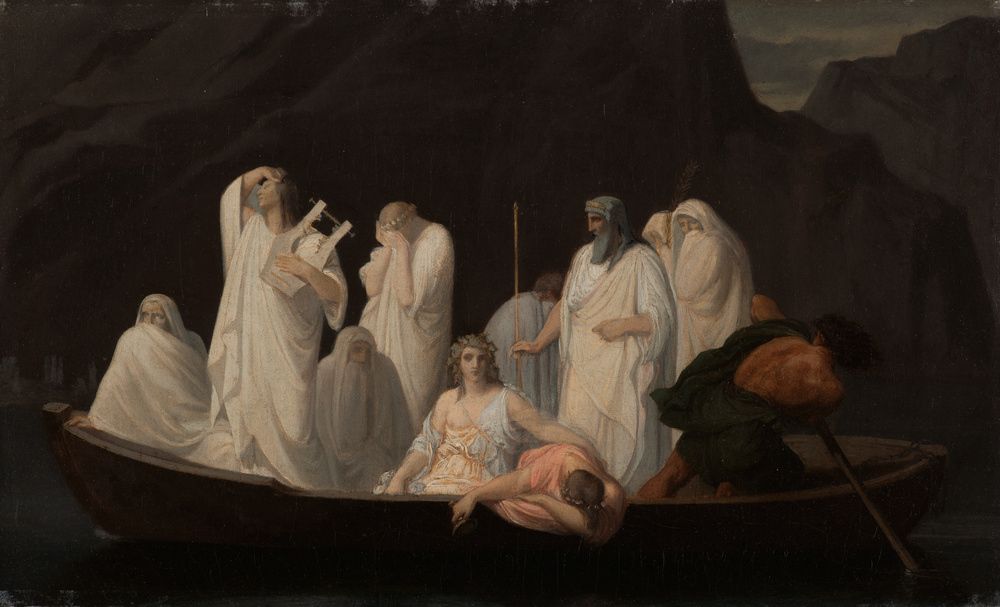
And yet, during this period, which corresponds to the invention and development of photography, artists were busy redefining the essence of art, starting with its fundamental components, to quote Maurice Denis' famous 1890 quote: "remember that a painting, before being a warhorse, a naked woman or some anecdote, is essentially a flat surface covered with colors in a certain assembled order."
Drawing on the museum's collections from the 19th to the 21st century, from Paul Delaroche to Martin Barré, from Jean Arp to Christopher Wool, this exhibition examines how artists have used this color to reflect on painting and, more broadly, on art.
In videos
Introduction


Prologue

Concept

Caption and credits
Henri-Pierre Picou, Le Styx, sketch, ca. 1849